









































How Much Does Commercial Energy Storage Cost?
In this article, we break down typical commercial energy storage price ranges for different system sizes and then walk through the key cost drivers behind those numbers—battery chemistry, economies of scale, storage duration, location, and system integration.
Commercial Energy Storage Cost: Typical Price Ranges for Different System Sizes
Segment | Typical System Size | Typical Installed Cost (USD/kWh) | Typical Applications | Main Cost Drivers |
Small to Medium C&I Systems | 50–500 kWh | $500–$1,000/kWh | Small factories, workshops, commercial buildings, office towers, shopping malls | Limited economies of scale, higher share of fixed soft costs, more customized design and integration |
Large Containerized BESS | 100 kWh to multi-MWh | $180–$320/kWh | Industrial parks, large campuses, EV fast-charging hubs, large factories, microgrids | Standardized container design, bulk procurement, lower BOS cost per kWh |
Typical “Middle Band” for C&I Projects | Wide range (50 kWh–MWh+) | $280–$580/kWh | General C&I storage projects of various sizes | Depends on size, duration, level of standardization, site conditions, and turnkey scope |
When people ask “How much does commercial energy storage cost?”, the honest answer is: it depends heavily on system size and configuration. Different commercial energy storage projects can look completely different in terms of capacity, duration, hardware, and site conditions—but we can still give some useful, ballpark ranges to guide expectations.
1.Small to Medium C&I Energy Storage Systems (50–500 kWh)
For smaller commercial and industrial (C&I) energy storage projects in the 50–500 kWh range, installed costs typically fall in the range of USD $500–$1,000 per kWh.
These systems are usually behind-the-meter and serve small factories, workshops, commercial buildings, office towers, and shopping malls. They’re often retrofitted into existing facilities, where available space, cable routing, and switchboard layouts can vary significantly from site to site.
At this scale, the objectives are usually clear and focused. Most customers want to reduce peak demand and lower demand charges, using the battery to shave short, high-cost power spikes. Others primarily want simple backup capability for critical loads during brief outages—for example, IT equipment, lighting, control systems, or smaller production lines.
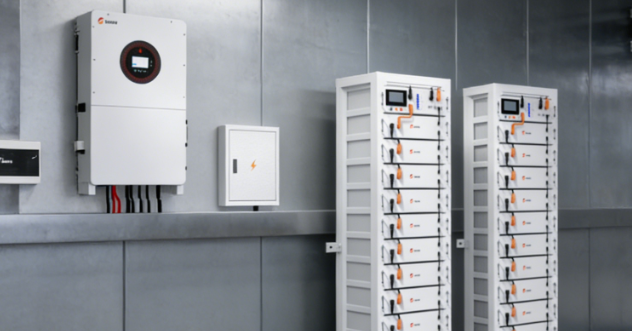
Compared with larger, containerized commercial energy storage systems, the cost per kWh is noticeably higher. A key reason is the limited economies of scale: a 100 kWh project simply cannot benefit from bulk purchasing or repeated, standardized construction processes the way a multi-MWh installation can.
Fixed “soft” costs are another factor. Items like engineering, permitting, grid interconnection review, commissioning, and project management don’t shrink in proportion to system size. In small projects, these overheads account for a much larger share of the total budget.
On top of this, smaller C&I energy storage systems tend to be highly site-specific. The design has to work around the constraints of a particular building, its electrical infrastructure, and existing operations. That level of customization adds integration complexity and additional labor.
In practice, this means that the smaller and more customized a commercial energy storage project is, the higher its cost per kWh tends to be, even if the overall project spend is relatively modest.
2.Large Containerized Systems (100+ kWh to Multi-MWh)
At the other end of the spectrum are large, containerized battery energy storage systems (BESS)—the familiar 20- or 40-foot containers widely used in utility-scale and large commercial energy storage projects.
For these containerized systems, starting at roughly 100 kWh and extending into the multi-MWh range, fully installed costs often fall in the USD $180–$320 per kWh range.
You’ll typically see this type of solution in industrial parks, large campuses, and logistics hubs, where multiple buildings or loads share common infrastructure. They are also common at EV fast-charging sites, especially when combined with on-site solar in “solar + storage + charging” configurations. Other frequent applications include large factories, microgrids, and multi-building commercial complexes.
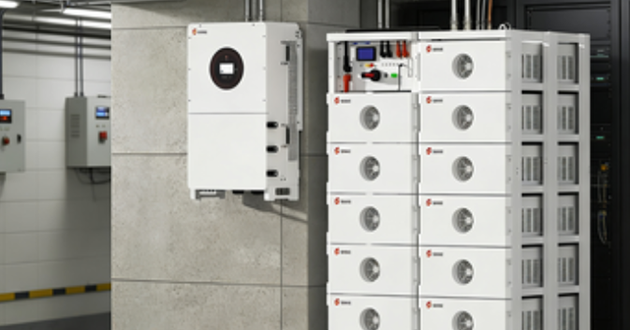
A major part of the cost advantage comes from their standardized container design. Batteries, PCS, HVAC, fire protection, and control systems are integrated and tested in the factory before shipment. This reduces on-site engineering, shortens installation time, and simplifies commissioning.
There is also a strong benefit from bulk purchasing and manufacturing scale. Developers and integrators often procure battery modules, inverters, and auxiliary systems in large volumes, which improves pricing and streamlines logistics, helping to push overall project costs down.
On the infrastructure side, Balance of System (BOS) costs—such as civil works, cabling, transformers, switchgear, and engineering—are spread across a much larger installed capacity. When the same types of BOS items are allocated over megawatt-hour-scale systems instead of small pilot projects, the BOS cost per kWh drops sharply.
Taken together, these factors mean that large, standardized commercial battery storage system projects can achieve significantly lower per-kWh costs, even though the total capital investment is much higher in absolute terms.
3.The “Middle Band” for C&I Energy Storage: Where Most Projects Land
Across different system sizes, durations, and configurations, most commercial and industrial energy storage projects end up in a typical installed range of about USD $280–$580 per kWh.
This should be viewed as a practical reference band, not a rigid rule. Where a specific project lands within that range depends on several factors. System size and storage duration play a major role—larger systems and longer durations often benefit from better unit economics. The choice between standardized, containerized solutions and a highly customized design for a single building also has a big impact on cost.
Local project conditions can move the numbers as well. Site access, construction complexity, and the strictness of grid and safety requirements all matter. Challenging ground conditions, tight urban locations, or stringent fire codes, for example, can significantly increase both BOS and soft costs.
The scope of supply is another key dimension. Some vendors provide a full turnkey commercial energy storage package that includes EMS, HVAC, fire systems, transformers, civil works, and complete design–build–commissioning services. Others may quote only the battery containers and PCS, leaving the owner responsible for BOS design and integration.
Because of all these variables, the $280–$580/kWh range is best used as a quick planning guide—useful for early budgeting, screening opportunities, or checking whether a quote is broadly in line with market expectations. The exact cost for any given project will always be shaped by its specific technical choices, commercial arrangements, and regulatory environment.
Key Cost Factors Driving Commercial Energy Storage Pricing
Knowing the price range is useful. But if you’re planning a commercial battery storage project, what really matters is understanding why one system might cost $250/kWh and another $800/kWh. The main levers are below.
1.Battery Chemistry
Battery chemistry is one of the most important drivers of both upfront price and lifetime value in commercial energy storage systems.
Lithium-ion (Li-ion) is now the default choice for most C&I projects. It tends to be more expensive at the beginning than older technologies, but in return you get:
Longer cycle life
Higher energy density (less space for the same kWh)
Lower routine maintenance
Because of this, Li-ion often delivers a lower cost per delivered kWh over the project life, especially in systems that cycle every day or close to it.
Lead-acid batteries are cheaper to buy, typically around USD $150–$250 per kWh, but they:
Degrade more quickly
Offer less usable depth of discharge
Require more maintenance and floor space
So the trade-off is clear: lead-acid reduces CAPEX, but Li-ion usually wins on lifetime cost (LCOS / LCOE) for modern commercial and industrial energy storage applications.
2.System Size (Economies of Scale)
For commercial energy storage, scale matters.
Larger, multi-MWh projects can use their size to:
Secure better pricing on batteries and PCS
Spread engineering and project management over more kWh
Run installation and commissioning more efficiently
Small systems don’t get as much of this benefit. Design, permitting, interconnection, and installation require similar effort whether you’re building 100 kWh or 5 MWh, so those fixed tasks take up a bigger slice of the budget on smaller projects.
That’s why a 100 kWh commercial energy storage system might cost in the USD $500–$1,000/kWh range, while a large MWh-scale project using similar technology can drop to around USD $180–$320/kWh.
3.Storage Duration (1h vs 2h vs 4h+)
Another key design choice for commercial energy storage systems is how many hours they can discharge at rated power. Typical setups include:
1-hour: 1 MW / 1 MWh
2-hour: 1 MW / 2 MWh
4-hour: 1 MW / 4 MWh
Longer duration means more batteries and higher CAPEX, but many other costs—PCS, interconnection, site works, control systems—don’t increase in the same proportion. Those fixed elements are spread over more stored energy.
Studies from organizations such as NREL indicate that unit economics can improve as you move from 1-hour to 2–4-hour commercial energy storage systems, particularly in markets that pay for sustained discharge, like multi-hour peak shaving or time-of-use shifting.
As a rough guide:
2–4 hours → peak shaving / demand charge management
0.5–1 hour → frequency regulation / fast response
1–many hours → backup power, depending on how critical the load is and how often outages occur
So the question “How many hours do I need?” is not only a technical design choice, but also a business decision.
4.Location and Market Conditions
For commercial energy storage, where you build can be as important as what you build.
In China, a mature local supply chain for batteries, PCS, containers, and BOS—plus intense competition—has pushed turnkey prices down, especially for large standardized projects. For utility-scale or large C&I systems, fully installed costs can sometimes reach around USD $100–$174 per kWh.
In the United States and Europe, total costs are higher because of:
More expensive labor and construction
Longer and more complex permitting and interconnection processes
Additional certification and grid code requirements
Import tariffs and extended project timelines
As a result, two commercial energy storage projects with similar technical specs can have very different price points purely due to location. It’s not just hardware prices—regulation, labor markets, logistics, and local standards all feed into the final number.
5.System Components and Level of Integration
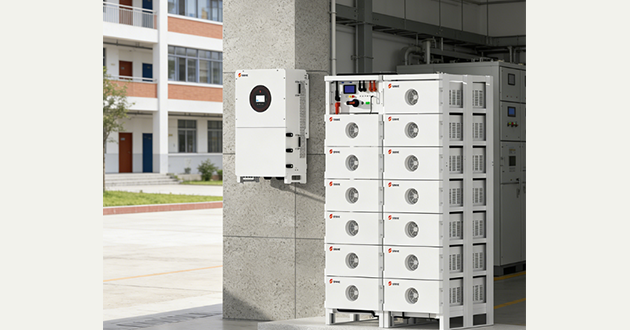
Buying “a battery system” really means buying a full commercial energy storage solution. A typical C&I setup includes:
Core equipment: battery packs, PCS/inverters, BMS, EMS
BOS: switchgear, transformers, cabling, HVAC, fire protection
Soft costs: engineering, permitting, construction, commissioning
How these pieces are packaged and delivered has a big impact on both cost and risk.
Turnkey solutions may look more expensive per kWh, but they usually come with coordinated design, clear responsibility, lower technical risk, and faster deployment. For many commercial energy storage buyers, that added assurance is worth the premium.
More DIY or fragmented approaches can make the hardware line in the proposal look cheaper, but shift engineering effort, integration risk, and coordination work onto the owner. That can translate into higher internal costs, longer timelines, and more room for errors.
So when evaluating quotes, the key question is not just “How much per kWh?”, but also “What exactly is included, and who is accountable for which parts of the system?”
How to Calculate the ROI of a Commercial Energy Storage System?
The ROI of a commercial energy storage system depends on the economic value generated throughout its service life. Instead of looking only at the initial equipment cost, businesses should evaluate how much value the system can create through lower electricity expenses, improved energy flexibility, and reduced operational risks.
The actual return varies by project, but several key factors typically influence the financial outcome:
Peak Demand Reduction
In areas where electricity bills include demand charges, storage can help reduce the impact of short periods of high power consumption. By supplying part of the required electricity during these periods, businesses may lower demand-related costs. The potential savings depend on the facility’s load profile, tariff structure, and operating schedule.
Time-of-Use Price Optimization
For markets with different electricity rates throughout the day, storage provides an opportunity to better match energy usage with pricing periods. Charging when electricity is less expensive and using stored power during higher-cost periods can improve overall energy cost efficiency.
Solar Energy Value Improvement
When connected with solar PV, storage helps businesses make better use of locally generated electricity. Instead of losing excess solar generation during periods of low demand, stored energy can be used later when renewable output is limited or electricity demand increases, improving the return from solar investments.
Reduced Impact of Power Interruptions
For facilities where downtime affects production, services, or critical equipment, storage can provide additional financial value by supporting essential operations during grid interruptions. The avoided losses from unexpected outages should also be considered when calculating the overall project return.
A comprehensive ROI evaluation should include electricity savings, operational benefits, maintenance requirements, and expected system lifespan. This approach provides a more realistic understanding of the investment value than comparing projects based only on the initial purchase cost.
FAQs
1. How much does a commercial energy storage system cost?
A commercial energy storage system does not have a fixed price because each project is designed around specific power requirements, storage capacity, and application goals. The final investment is influenced by factors such as battery technology, system configuration, installation conditions, and integration complexity. For this reason, businesses should evaluate the complete project scope, including equipment, installation, and expected operational benefits, rather than comparing battery prices alone.
2. Is commercial energy storage worth the investment?
Whether commercial energy storage is worth the investment depends on how effectively the system can create value for a specific facility. Projects with high demand charges, variable electricity prices, renewable energy generation, or strict backup requirements often have greater opportunities to achieve financial benefits. The overall return is usually evaluated through energy savings, improved reliability, and long-term operational advantages.
3. How long does a commercial energy storage system last?
The service life of a commercial energy storage system is affected by battery chemistry, operating conditions, charge and discharge cycles, and maintenance quality. Modern lithium-based storage solutions are typically equipped with battery management and thermal control technologies to maintain stable performance over time. With proper system design and regular maintenance, businesses can maximize reliability and extend the useful life of the installation.
4. What factors affect commercial energy storage costs?
Several elements can influence commercial energy storage costs, including system size, battery selection, storage duration, installation environment, and the level of customization required. Larger projects often benefit from economies of scale, while smaller or highly customized installations may involve higher engineering and integration expenses. Location, grid requirements, safety standards, and service coverage can also affect the final project budget.
5. How do I size a commercial energy storage system?
Sizing a commercial energy storage system requires analyzing how a facility consumes and manages electricity. Factors such as load profile, peak demand, backup requirements, renewable energy generation, and future expansion plans all affect the required capacity and power rating. A properly sized system should meet current operational needs while maintaining flexibility for future changes.
6. Can commercial energy storage work with solar panels?
Yes, commercial energy storage can work with solar panels by storing excess solar generation and making it available when renewable output is lower or electricity demand increases. This combination helps businesses improve solar self-consumption, reduce dependence on grid electricity, and gain greater control over energy usage. For facilities with large-scale solar installations, adding storage can further improve the overall value of renewable energy investments.
Read more:
https://www.srnesolar.com/articledetail/what-is-c-i-energy-storage.html
Conclusion
Commercial energy storage doesn’t have a single “right” price. Instead, it lives within bands: small C&I systems often sit in the USD $500–$1,000/kWh range, large containerized projects can fall to around USD $180–$320/kWh, and many real-world C&I installations land somewhere in the USD $280–$580/kWh middle. Where your project ends up in that spectrum depends on what you build, where you build it, and how it’s put together.
