









































How Big is The C&I Energy Storage Market?
C&I energy storage is no longer a niche add-on—it’s quickly becoming a practical infrastructure upgrade for businesses looking to cut energy costs and strengthen operational resilience. What’s most compelling isn’t just the pace of deployment, but how the market itself is maturing: solutions are becoming more turnkey, supply chains are growing more reliable, and new financing models are lowering the barrier to entry. Together, these shifts are making C&I energy storage easier to standardize and scale across portfolios, not just individual sites.
This article breaks down what’s changing in the C&I energy storage market right now—across technology, supply chains, and financing models—so you can quickly see where the market is heading and what it could mean for your business strategy.
C&I Energy Storage: Market Size and Growth Outlook
Forecast A: Mid-Term Growth Outlook (2024–2033)
A commonly referenced forecast estimates the C&I energy storage market at ~US$8.5B in 2024, rising to ~US$35B by 2033. That implies a solid ~17.5% CAGR, reflecting how commercial and industrial customers are increasingly treating C&I energy storage as a practical lever for controlling electricity spend and reducing operational exposure—rather than a “nice-to-have” add-on.
Forecast B: Longer-Horizon Expansion (2023–2035)
Another outlook takes a more conservative starting point, placing the C&I energy storage market at ~US$3.18B in 2023, then projecting it to exceed US$10B by 2030 and potentially reach ~US$21.64B by 2035. The growth curve is steadier in this scenario, but still points to strong momentum as C&I energy storage scales across more sites and use cases—from peak shaving and tariff optimization to backup resilience and better integration with on-site solar.
Why Is C&I Battery Storage Growing So Fast?
1.Renewable Integration: Making Solar and Wind More Practical
For many businesses, on-site solar—and sometimes contracted wind—doesn’t align with when loads are highest. C&I energy storage systems help bridge that mismatch by storing excess generation and releasing it later, which can lift self-consumption, reduce wasted renewable output, and make clean energy supply more valuable on the balance sheet.
2.Peak Shaving & Demand Charge Reduction: Targeting the Costliest Hours
In many regions, the most expensive part of a commercial power bill is tied to short-lived peaks or demand-based fees. With the right dispatch strategy, C&I battery storage can discharge during those high-load moments to trim peaks, soften demand charges, and keep a handful of spikes from setting an outsized monthly bill.
3.Grid Resilience & Backup Power: Keeping Operations Running
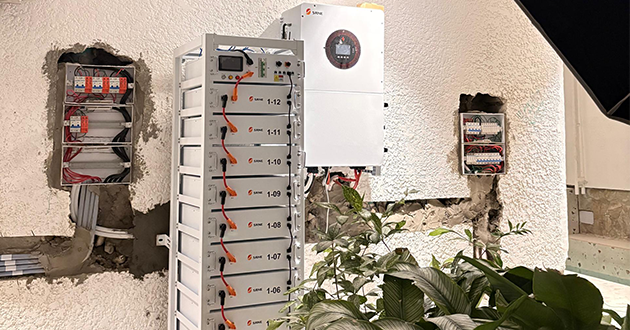
Outages, voltage dips, and power-quality disturbances can quickly translate into downtime, product loss, or equipment interruptions—especially for factories, data centers, cold chains, and other critical sites. Commercial and industrial energy storage adds fast-responding support and backup capability, helping facilities ride through grid events and restart more smoothly when disruptions do happen.
4.Supportive Policies: Incentives and Rules That Speed Up Adoption
Regulatory momentum is also a key tailwind, particularly in markets such as China and Europe. Incentives, grid-stability requirements, and decarbonization targets can improve project economics and reduce decision risk, making it easier for companies to greenlight C&I energy storage deployments.
5.Falling Battery Costs: Improving ROI and Expanding Buying Options
As battery prices fall and system integration becomes more standardized, the economics of C&I storage continue to improve.In parallel,more flexible commercial models—leasing, shared-savings agreements, and energy-as-a-service—are lowering the upfront hurdle and helping more businesses adopt storage without heavy capex.
How Commercial and Industrial Energy Storage Differs from Utility-Scale
Compared with utility-scale projects, the C&I energy storage market is usually smaller in total installed capacity—but it often scales faster. Utility-scale growth is shaped by a limited number of large, procurement-driven deployments, while commercial and industrial energy storage expands through many smaller, repeatable projects across a wide range of businesses.Because these systems are tied closely to everyday operational needs—lowering electricity costs, improving reliability, and making better use of on-site renewables—the market tends to evolve in a more distributed, demand-led way.
1.Fragmented Demand: Many Customer Types, Many Use Cases
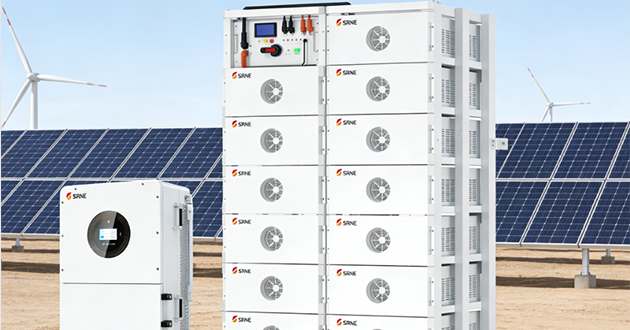
Demand for commercial and industrial energy storage comes from customers with very different load profiles and priorities: manufacturers, industrial parks, retail and mixed-use buildings, data centers, and EV charging sites. That diversity means there isn’t a single “standard” approach. Instead, the C&I energy storage market is made up of multiple sub-segments, each driven by its own economics, system sizing preferences, and dispatch strategies.
2.Project Economics: Highly Site-Specific, Not One-Size-Fits-All
Returns in commercial and industrial energy storage projects are often determined by local, practical variables. Tariff structures (especially demand charges), the facility’s load curve, interconnection requirements, and fire-safety compliance all influence system design and achievable value. Financing terms can also shift the outcome materially. In practice, C&I energy storage performs best when it’s configured around the site’s constraints and strongest value streams—rather than being deployed as a uniform, cookie-cutter solution everywhere.
What’s Changing in C&I Energy Storage Right Now
The C&I energy storage market is moving quickly—not just in deployment volume, but in how projects are designed, delivered, and financed. Higher-performing systems, a more resilient supply chain, and more flexible commercial structures are making C&I energy storage easier to standardize and replicate across portfolios, rather than treating each site as a bespoke, one-off build.
1.Technology: Smarter Systems, More Turnkey Delivery
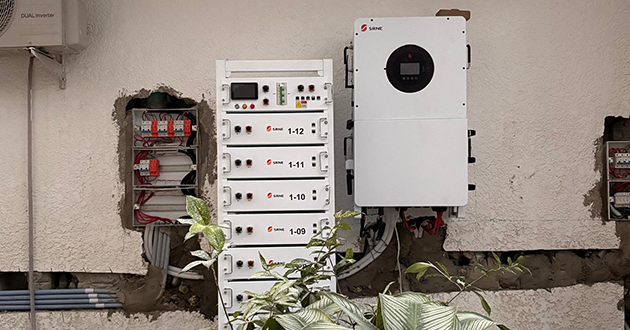
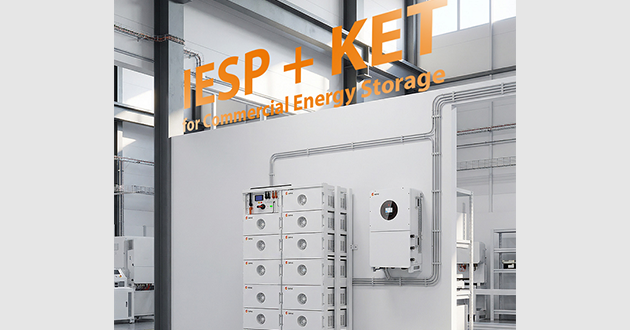
Today’s C&I battery energy storage systems (BESS) are becoming easier to run and more predictable in performance, helped by better thermal management (including liquid cooling) and increasingly capable EMS software. At the same time, the industry is shifting toward standardized, pre-integrated “packaged”solutions—reducing custom engineering, shortening commissioning timelines, and improving consistency for multi-site rollouts.
2.Supply Chains: Faster Execution, More Reliable Delivery
Supply chains are adapting to support tighter timelines and more dependable delivery. There’s a stronger push toward diversified or localized sourcing, along with modular designs that simplify installation and coordination across components. For developers and integrators, the focus is on removing bottlenecks and lowering total delivered cost—without compromising the safety and compliance expectations that come with C&I energy storage projects.
3.Financing & Contracting: More Flexible Ways to Buy and Deploy
The market is also seeing more options beyond upfront capex. Leasing, shared-savings contracts, and Energy Storage as a Service (ESaaS) are lowering the entry barrier for customers who prefer predictable payments and minimal initial spend. Increasingly, storage is bundled with solar and EV charging to stack value streams and streamline procurement—so C&I energy storage feels like one integrated upgrade rather than multiple separate projects.
Read more:
https://www.srnesolar.com/articledetail/top-10-commercial-energy-storage-companies-in-2025.html
Conclusion
For C&I users, that means faster deployments, clearer economics, and a more straightforward path to pairing storage with solar, EV charging, and broader energy management goals.
