













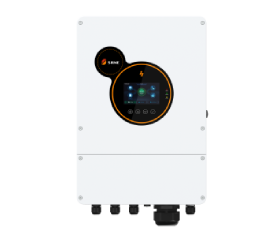
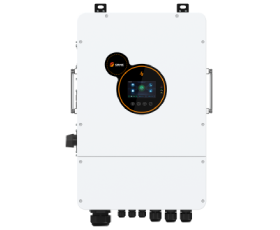

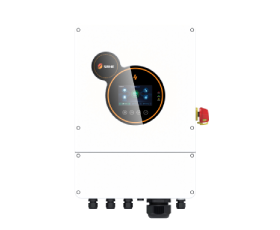
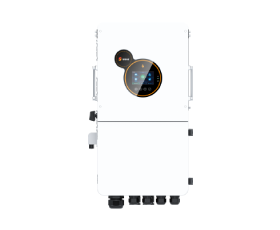

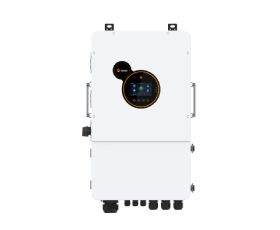

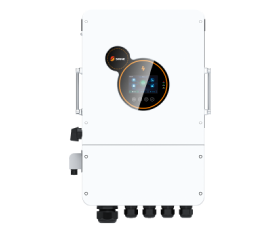

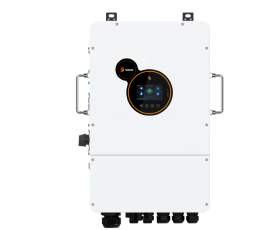
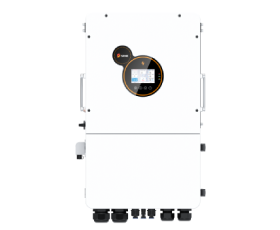

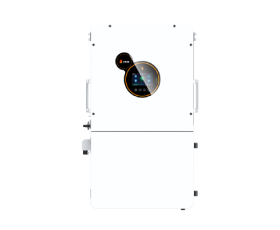
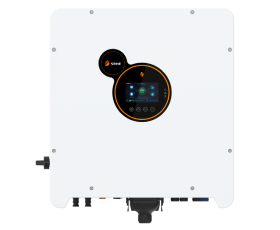
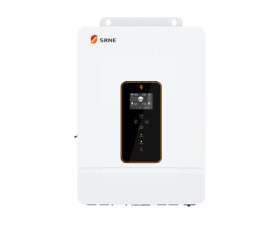

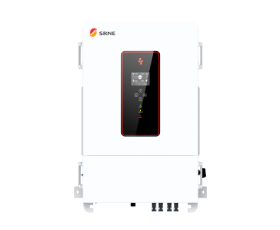
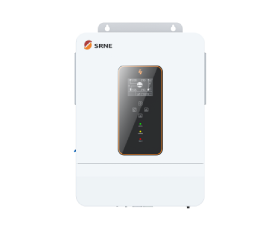
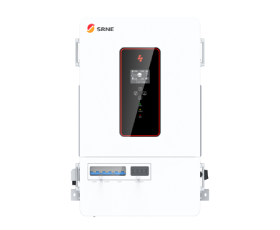


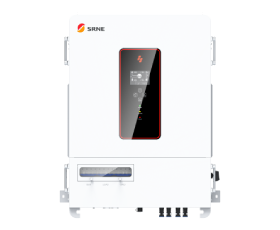


















300A Battery Current for 14–16kW Single-Phase Storage
Up to 300A battery current gives the 14–16kW ASP the charge/discharge throughput needed for large 48V banks and high single-phase load demand. The ASP 14–16kW EU models also list up to 300A grid/generator charging current.


10-Second Peak Output for Motors up to 9HP
The 10-second 2x surge reserve and 9HP motor reference provide a clear starting-power advantage for large pumps, compressors and other single-phase motor loads. The datasheet specifies peak power at twice rated output for 10 seconds across the 14kW, 15kW and 16kW models, and lists a 9HP motor-load capacity.
Two 12kW PV Inputs for High-Current Modules
Higher MPPT input current is better suited to modern high-current modules and parallel string arrangements, reducing the chance that array current becomes the limiting factor. With a 650V open-circuit limit and 120–600V MPPT window, the ASP 14–16kW EU can accept a large array while accommodating modern high-current modules.


100A Grid Bypass for Large Single-Phase Loads
The 100A grid-bypass path lets large single-phase loads run directly from accepted utility power without treating passthrough current as battery-derived inverter output. The 100A figure applies to the bypass path; continuous battery-derived inverter output remains a separate rating.
Expand 14–16kW Systems to 96kW
System power can be expanded incrementally as load or storage demand increases instead of sizing the entire project around one inverter chassis from the start. SRNE lists parallel capacity from one to six units, reaching up to 96kW with six 16kW units.
RSD, AFCI and GFCI for Specific PV Fault Protection
RSD, AFCI and GFCI address three different safety needs in a high-power PV system: rapid shutdown, DC arc-fault detection and ground-fault or leakage protection. Together with the model's other electrical protections, these functions provide defined responses to specific fault conditions instead of relying on a broad safety claim.
OVERVIEW
Download
Datasheet
User Manual
FAQ

Is a 16kW inverter enough for a large 230V single-phase home?

A 16kW single phase inverter can supply several high-power household appliances simultaneously, as long as their combined running load remains within the rated output. For example, air conditioning, kitchen equipment, electric water heating and general household circuits may operate together, depending on their actual power consumption. The ASP 14–16kW off grid inverter range offers three power options for properties with different energy requirements. Rather than calculating the total wattage of every installed appliance, installers should focus on the maximum load likely to operate at one time, including the starting demand of pumps and compressors.
Can this inverter start a 9HP water pump without a soft starter?
It may be possible, depending on the pump's starting current and other connected equipment. The 14–16kW models specify motor-load support up to 9HP, with short-duration peak output reaching twice the rated power for 10 seconds. For a solar inverter for water pump applications, horsepower alone is not enough to determine compatibility. A direct-on-line motor can draw considerably more current during startup than during normal operation. Checking the motor's locked-rotor current, acceleration time and starting method will help determine whether a soft starter or variable-frequency drive is necessary.
How should solar strings be divided between the two 36A MPPT inputs?
Each MPPT supports up to 12kW of PV power and 36A of input current, allowing the two channels to manage separate solar array groups. The MPPT operating voltage range is 120–600V, with a maximum PV open-circuit voltage of 650V. For instance, panels installed on roof sections facing different directions can be assigned to separate trackers, allowing each array to operate according to its own sunlight conditions. When configuring an off grid solar inverter, string length and parallel connections should be calculated using module voltage, current and temperature characteristics. Although the total PV input capacity reaches 24kW, each MPPT must remain within its individual limits, and the inverter's continuous AC output remains 14–16kW.
How much battery storage is needed to run a 16kW off-grid system overnight?
Battery capacity depends on overnight energy consumption rather than the inverter's rated output. A property drawing an average of 3kW for 10 hours, for example, requires approximately 30kWh of usable energy before accounting for conversion losses and operating reserves. The 14–16kW 48v inverter configuration supports a nominal 48V battery system with a maximum charging and discharging current of 300A. If lithium batteries are operated at a permitted 90% depth of discharge, the example above requires at least 33.3kWh of nominal storage before allowing for losses, temperature effects and aging. The battery bank must also provide sufficient discharge current to support the home's expected peak demand.
Can the inverter charge batteries while a generator is supplying household loads?
Yes. In a supported generator-charging mode, incoming AC power can be allocated between connected loads and battery charging according to the configured operating settings. Consider a 12kW generator already supplying 7kW of household demand. Less than 5kW will remain available for battery charging once operating margins and conversion losses are considered. Although the ASP 14–16kW solar inverter and charger configuration supports up to 300A of AC-source battery charging on the DC side, the actual charging rate must reflect generator capacity and battery limits. Reducing the charging current may be necessary when household consumption increases.
How does the 100A grid bypass affect AC distribution design?
The 100A grid bypass rating describes the permitted current through the AC bypass path when an accepted grid source is available. It does not increase the inverter's continuous battery-powered output. At 230V, a 100A single-phase bypass corresponds to approximately 23kVA of apparent power, while the inverter itself remains rated at 14kW, 15kW or 16kW, depending on the selected model. In a larger off grid solar system, cables, breakers and downstream distribution should account for both bypass operation and battery-powered operation. Equipment that can run through the bypass path may exceed the available inverter output when the external AC source is disconnected.