













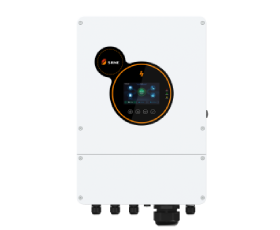
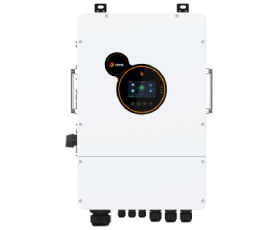

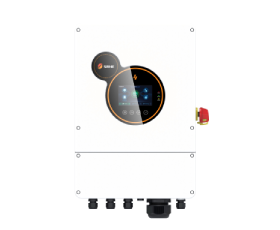
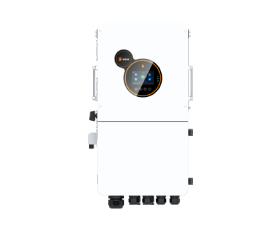

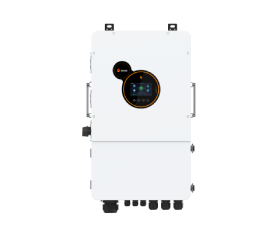

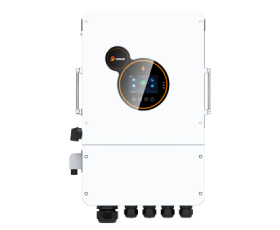

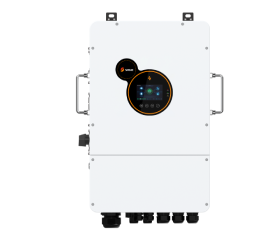
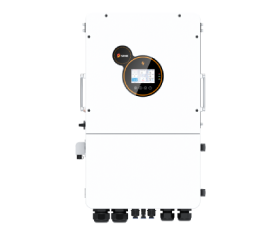

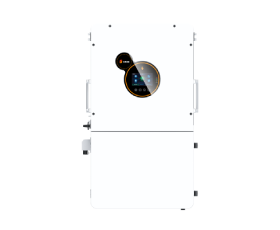


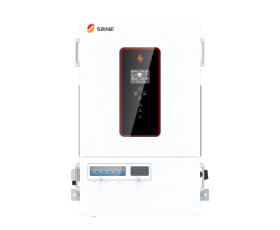


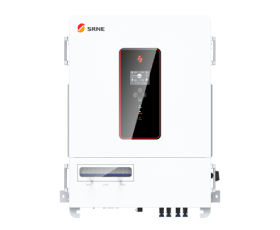
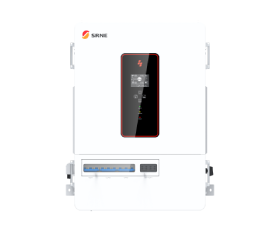

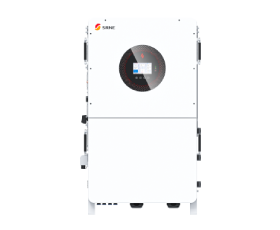





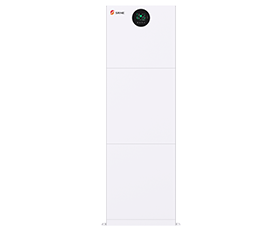
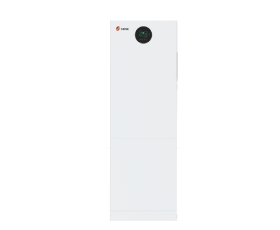



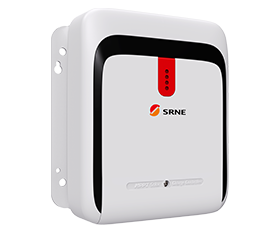

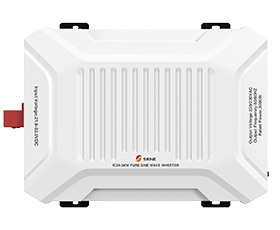
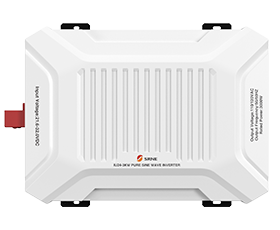









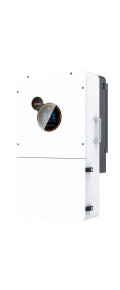
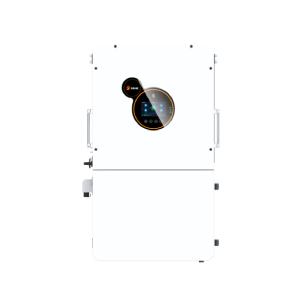
HESP 14-18kW
Three Phase Low Voltage Hybrid Inverter
US | Three Phase | 3 MPPTs

150% Unbalanced-Load Support
The HESP 14–18kW three phase hybrid inverter supports uneven 120/208V demand, with 150% single-phase unbalanced-load tolerance for mixed branch circuits and real load variation.
Three MPPTs with 1.6× PV Input
Three trackers divide large arrays by orientation or string group. PV input reaches 22.4–28.8kW across the range, giving the three phase solar inverter more solar capacity for loads and charging.
Dual Battery Inputs and Up to 350A
Two battery inputs suit the high-current 48V architecture, while the 18kW model reaches up to 350A charge/discharge. The 48V inverter also provides up to 2× off-grid peak power.

Mixed 120/208V Loads
The 3 phase inverter supports sites where three-phase distribution feeds larger equipment and uneven single-phase branch loads. Its 150% unbalanced-load capability adds tolerance when receptacles, lighting and other circuits shift demand between phases during normal operation.
High-Power PV and Battery Systems
Three MPPTs and PV input up to 1.6× rated AC power support larger roofs and multi-array layouts. Dual battery inputs help distribute high DC current, allowing the solar hybrid inverter to combine substantial PV, storage and three-phase load capacity in one 48V system.
Expandable Backup for Large Sites
Up to nine hybrid inverters can operate in parallel, while the 18kW model provides 36kVA off-grid peak output and a large bypass path. This makes the hybrid solar inverter relevant where projects need staged growth, motor-starting reserve and a clear path to increase capacity without changing product family.
HESP 14–18kW Three Phase Hybrid Inverter OVERVIEW
Download
Datasheet
User Manual
FAQ

What problem does 150% unbalanced-load support solve on a 120/208V system?

A three-phase service can still have many 120V single-phase branch circuits, so real demand is rarely divided perfectly across all three phases. SRNE specifies 150% single-phase unbalanced-load support for this HESP range, giving the 3 phase hybrid inverter more tolerance when one phase temporarily carries heavier lighting, receptacle or equipment demand. This does not eliminate the need to balance the panel where practical. It gives the system additional operating margin for the uneven load patterns that naturally occur in mixed-use buildings.
Why does the US model use two battery inputs?
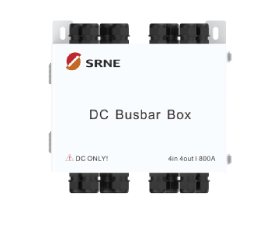
The 14–18kW platform remains a 48V nominal battery system, so DC current becomes high as inverter power rises. Two battery input paths provide a more practical connection architecture for that current, and the 18kW model supports up to 350A charge/discharge. A 48V inverter at this scale requires batteries, busbars, conductors, fuses and disconnects that are designed together. Two inputs help distribute connection paths, but they do not make undersized battery wiring or an under-rated BMS acceptable.
How much PV can be connected relative to the inverter rating?
SRNE lists maximum PV input of 22.4kW for the 14kW model, 25.6kW for 16kW and 28.8kW for 18kW, equivalent to 1.6× the corresponding rated AC power. That extra DC capacity helps the three phase solar inverter collect more energy during weaker irradiance and supply both loads and battery charging. Continuous AC output is still limited by the inverter rating, and each MPPT must stay within its own voltage and current limits. PV oversizing should therefore be designed, not simply maximized.
What does the 2× off-grid peak output mean for large motors?
The 14kW, 16kW and 18kW models list off-grid peak power of 28kVA, 32kVA and 36kVA. This gives short-duration reserve for pumps, compressors and other loads that draw high current when starting. The 3 phase inverter should still be selected from the normal continuous load first, then checked against motor inrush and the duration of the startup event. Peak capacity cannot be used as the continuous operating target, and simultaneous motor starts may require additional headroom.
When is a 200A grid-bypass path useful?
A large bypass path allows substantial utility-supplied loads to pass through while grid power is available, so the battery does not have to carry the same demand through the inverter stage. This can preserve stored energy for outages or scheduled energy management. In a solar hybrid inverter system, bypass current is not additional converted inverter power; it is a separate path from the accepted AC source. Upstream service capacity, breakers, conductors and downstream equipment still have to be sized for the current that may pass through.
What should be planned before using the nine-unit parallel capability?
Nine-unit expansion can take the platform into a much larger power class, but the design consequences extend far beyond adding inverter kW. Aggregate battery current, PV distribution, AC bus capacity, protection coordination, communications, equipment spacing and service limits all increase with each unit. A HESP 14–18kW three phase hybrid inverter project that may grow later should reserve those resources from the start. Parallel capability is most valuable when it is part of the original system architecture rather than an unplanned add-on.