















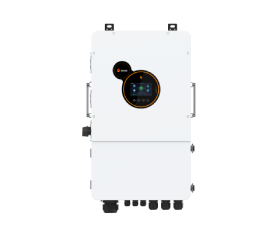

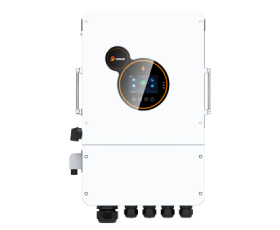

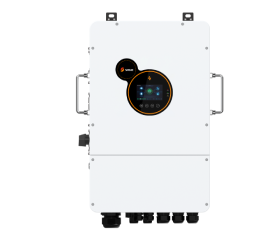
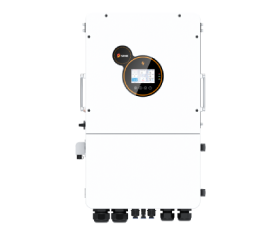

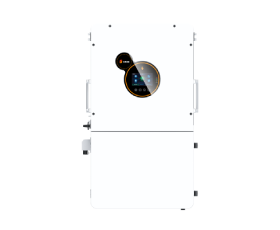
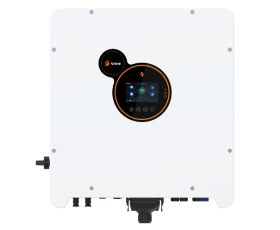


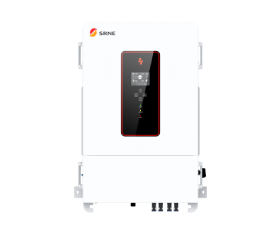
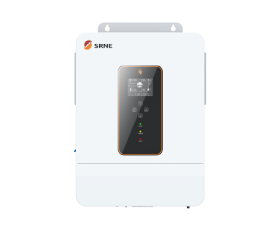




















How To Size a Hybrid Solar Inverter
When we choose a solar inverter model, it is to meet the higher quality of life we currently want, and also to ensure that we do not waste resources while maintaining our normal daily life. Before reading this content, it mainly takes you to understand the electricity demand of a typical household, especially the maximum load and solar power generation capacity, and it can also help you choose the appropriate solar hybrid inverter model.
How to Choose a Solar Hybrid Inverter Model Based on Household Needs
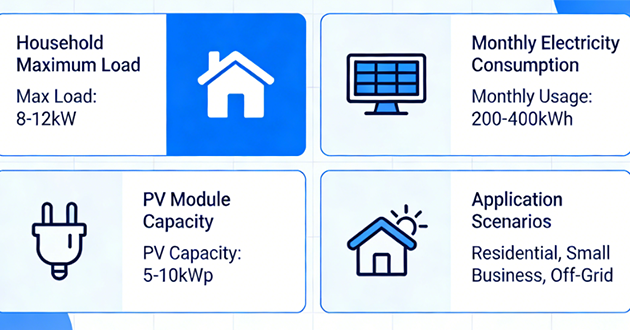
Before selecting a solar inverter model, we may need to understand four factors: “the household’s maximum load, monthly electricity consumption, PV module capacity, and scenarios of different models.” Next, we will analyze these factors in detail to answer your questions: “Why do I need to understand these in order to really choose a suitable inverter? Can these factors really help me? What model should I actually choose?”
Steps to Choose a Hybrid Inverter
1. Determine the Maximum Operating Load First
In fact, the household’s maximum simultaneous operating load is key to choosing a suitable inverter model. When selecting a solar hybrid inverter, we must first know whether the AC output power of the solar hybrid inverter matches the household’s maximum load.
You may wonder, what is the household’s maximum load? The maximum load (peak load) refers to the highest power required when all appliances operate simultaneously. A 2026 study published in an energy journal analyzed the real electricity usage data of 11,940 U.S. households. The average 15-minute maximum demand was 9.7 kW, most household peaks were between 7–11.5 kW, and household peak load was mainly determined by a few high-power appliances (air conditioners, water heaters, electric vehicles, etc.), rather than all devices running simultaneously. Generally, household peak load is determined mainly by the number of household members, the number of appliances, and whether people are home and active, and it is not closely related to house type or income. Therefore, when considering the solar hybrid inverter model, we do not need to worry about the size of our house.
2. Calculate the Power of All Simultaneously Operating Appliances
To select a suitable hybrid solar inverter, we also need to calculate the total power of all appliances that might operate simultaneously. Most common household appliances have similar power ranges. The data below is widely used in residential energy planning and can be used as a reference.
Typical Household Appliance Power Reference
Appliance | Typical Operating Power |
Refrigerator | 120–180 W |
Air Conditioner | 1500–2000 W |
Electric Water Heater | 3000–4500 W |
Washing Machine | 500–1000 W |
TV | 100–200 W |
Microwave Oven | 1000–1500 W |
LED Lighting | 7–15 W per bulb |
The above data mainly comes from appliance rated power and actual usage data. Suppose a typical household during the evening peak uses an air conditioner (1800 W), water heater (4000 W), refrigerator (150 W), TV (120 W), and LED lighting (100 W), then we can calculate: 1800 + 4000 + 150 + 120 + 100 = 6170 W.
3. Add a 25% Safety Margin to Cope with Instantaneous Power Fluctuations
Authoritative sources show that in a study of 32 real households’ electricity monitoring cases, the average maximum load was 14.2 kW, and the average power was 1.3 kW. This proves that household electricity usage has obvious instantaneous peaks, and even the maximum load (peak) may be more than 10 times the average load.
The U.S. power system report, based on statistics of 5,903 households, showed a total peak load of 20,962 kW, with an average peak of about 3.5 kW per household. The study shows that household load tends to concentrate at specific times.
The situations in the above two cases are mainly due to two reasons: concentrated appliance operating time and high-power appliances operating simultaneously.
Reason One: Concentrated Household Electricity Usage Time
Household electricity demand is not evenly distributed. Why? Because during the day we work outside, and in the evening when we return home we may turn on the TV, charge mobile phones or electric bikes, etc. Some research cases confirm that the household electricity peak usually occurs in the evening to night (around 17:00–21:00). These devices all operate during this period, which increases the instantaneous electricity usage rate.
Reason Two: High-Power Appliances and Some Appliances’ Starting Power
Both of these can increase instantaneous power. As mentioned above, household peak load is often determined by a few high-power appliances rather than the average power of all devices. For example, air conditioners (1500 W), water heaters (3000 W), etc., normally use only 1–2 kW, but instantaneous load may rise rapidly. Moreover, some appliances generate instantaneous starting power when switched on for a short time, increasing system load and thus raising the household peak load.
To ensure the solar inverter can withstand these instantaneous power shocks, it is recommended to add a 25% safety margin.
Suppose the household’s total power demand is 5600 W. Adding a 25% safety margin: 5600 W × 1.25 = 7000 W. To cope with the peak power during appliance startup, we would choose an inverter of about 7000 W.
4. Calculate Solar Array Capacity (DC Power)
Before purchasing a solar hybrid inverter, we also need to consider the capacity of the solar panels. Questions such as “Why do we need to buy solar panels? Why do we need to consider the capacity of solar panels? Can we just purchase a hybrid inverter?” may come to mind. In fact, the solar inverter essentially converts direct current into alternating current, and it cannot generate electricity by itself. Therefore, the power ultimately comes from solar panels or the battery system.
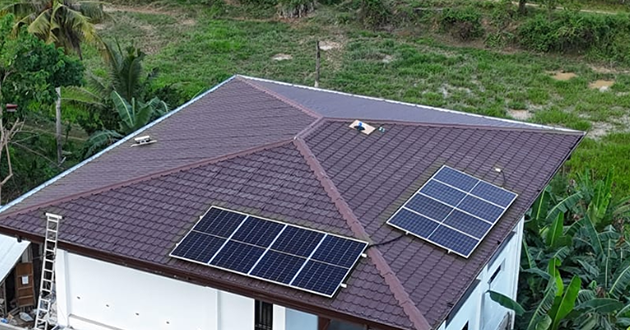
Some real data can prove why it is necessary to consider the capacity of solar panels. According to simulated generation data results provided by PVGIS, “for every 1 kW of installed solar modules, the annual electricity generation is about 1519 kWh.” This indicates one point: the larger the solar module capacity, the higher the annual power generation. In addition, a scientific research paper pointed out that an actual observation study in the Netherlands found that for every 1 kWp (kilowatt peak) of photovoltaic capacity, the actual annual power generation of the PV system is approximately 838–946 kWh/kWp (estimated depending on the year).
The above data shows that we should not only look at the inverter power, but also consider the scale of the solar panels, solar resource, and system efficiency, so that we can calculate the expected electricity generation.
5. Selection of Solar Hybrid Inverter Power (AC Output) and the DC/AC Ratio
This is the final step of the selection process. The AC output power of a hybrid inverter should not only match the household peak load, but also match the capacity of the solar panels.
We need to pay attention to two points: if the inverter power is insufficient, the household electricity may experience power outages or inverter overload when the peak load occurs. In addition, it may be unable to safely send excess generated electricity to the grid. If the inverter power is too large, the power generation efficiency will decrease and it may increase your own costs.
There is also a “blind spot” that we may not clearly understand—the DC/AC ratio. This is a calculation formula between solar modules and the inverter:
DC/AC Ratio = Total module DC power (kWdc)÷Inverter rated AC output (kWac).
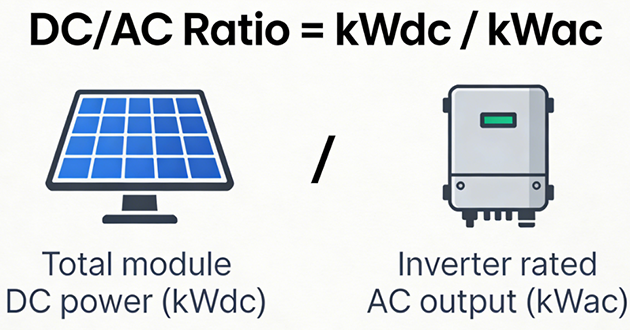
In the solar industry and installation guidelines, you may have heard that a DC/AC ratio of about 1.1–1.2 is the most common. In other words, in practical situations, a 6 kW panel system usually needs to be equipped with a hybrid inverter of about 5 kW, so that it can ensure better energy efficiency and higher effectiveness.
After reading the entire article, you will find that choosing a suitable model of solar inverter is a very “troublesome” task. It is not about casually buying one that is the right size and low cost; we also need to consider multiple factors. The table below provides a scenario reference for you. The specific power still needs to be calculated based on actual conditions and evaluated by installers through on-site inspection.
Common Hybrid Inverters Power Selection Scenarios
System Type | Inverter Power | Applicable Scenario | Battery Capacity | Suitable Households |
Small System | 3–4 kW | Suitable for small homes with low electricity demand | Usually no battery or a small-capacity battery | Low-electricity-consumption households |
Medium System | 5–7 kW | Suitable for typical households | 10–14 kWh | Households with common appliances such as air conditioners and washing machines |
Large System | 8–12 kW or above | Suitable for high-energy-consumption households, such as those with electric vehicles | 15 kWh or above | Households with high electricity demand or electric vehicles |
Conclusion
After going through this series of steps, you should have a certain understanding of hybrid inverter models. If you are still not sure which model is suitable, then contact SRNE experts as soon as possible. They will provide suggestions based on your actual situation and similar cases.
Read more:
What is a Three Phase Hybrid Inverter?
Will I Save Power if I Switch Off the Hybrid Inverter When Not Using?
