













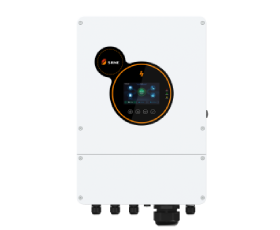
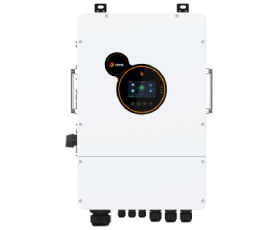

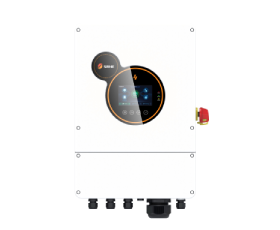
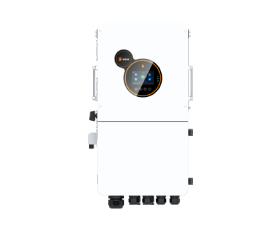

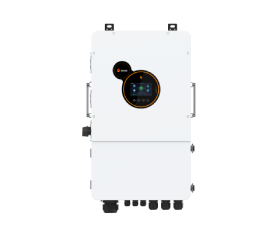

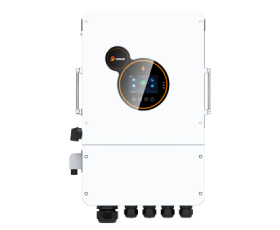

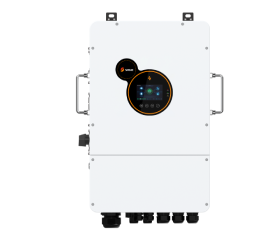
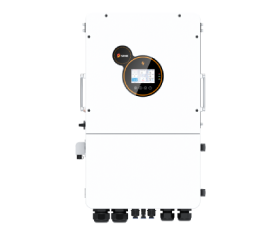

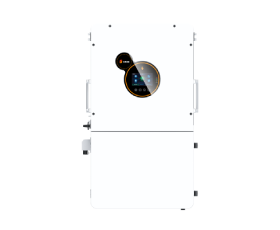
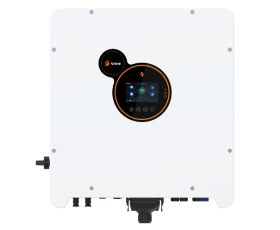


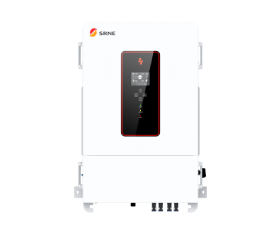
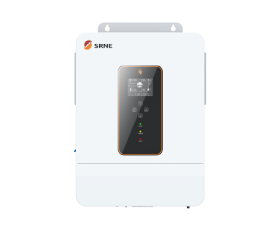
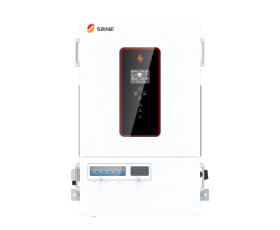

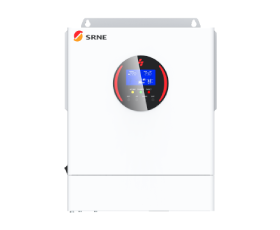

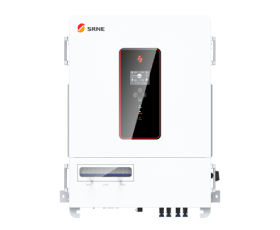
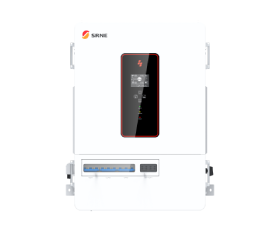






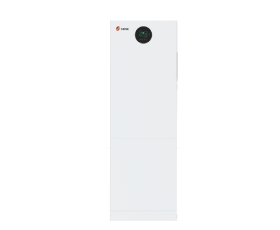

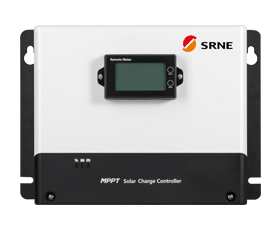
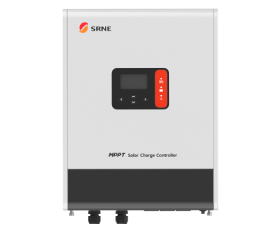
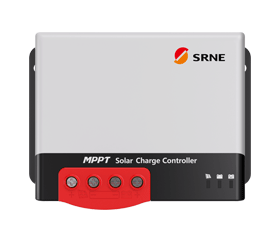





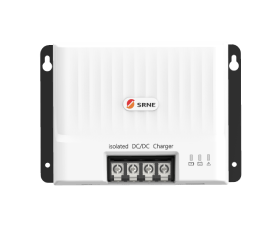
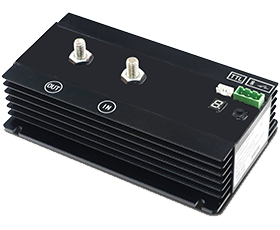







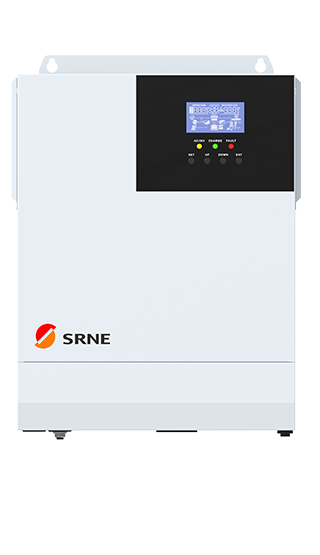
12V and 24V Battery Options
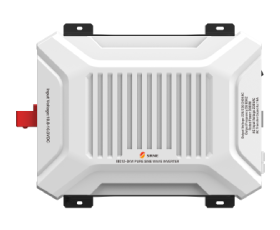
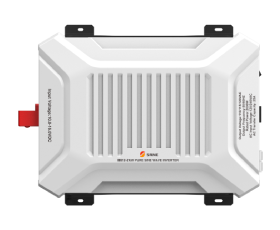
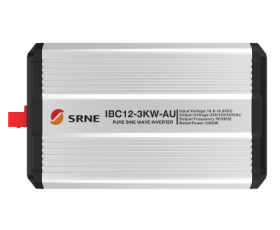
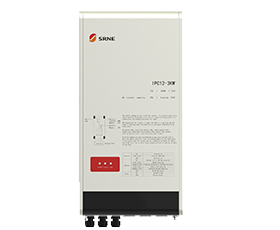
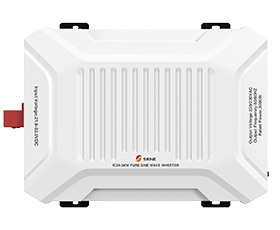
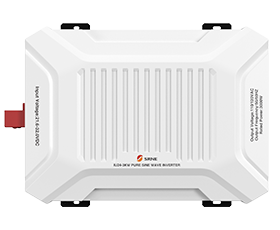
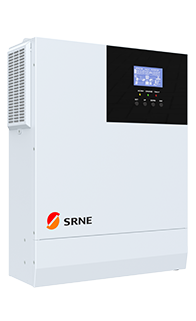
The HF 1–3kW off grid inverter family uses 12V batteries at 1–1.5kW and 24V options around 3kW, allowing battery voltage to scale with load instead of forcing one architecture across the range.
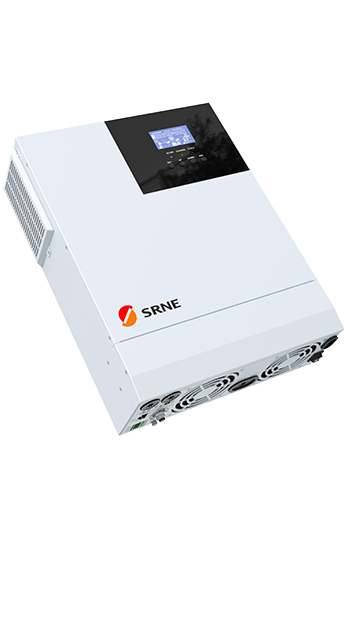
PV Input for Short or Longer Strings
Low-voltage 1–1.5kW versions use short-string PV input, while selected 3kW models accept much higher PV voltage. This gives the off grid solar inverter options for compact arrays and longer strings.
2× Peak Power for Small Motor Loads
Key models provide peak output up to about 2× rated power. The 24V inverter variants therefore have short-duration headroom for small pumps, refrigerators and similar startup loads.


Cabins and Low-Demand Off-Grid Loads
The 1kW and 1.5kW 12V models suit systems where lighting, electronics and small appliances dominate. The off grid inverter keeps storage, PV and AC capacity aligned with modest daily use, making it practical for cabins, small backup circuits and entry-level solar systems.
24V Systems for Higher Small-Home Loads
Around the 3kW class, a 24 volt inverter can serve more household loads while reducing battery current compared with 12V at similar power. This is useful for small homes or backup circuits that have outgrown a compact 12V system but do not need a 48V platform.
Short-String or High-Voltage PV Layouts
The HF family includes low-PV and higher-voltage PV variants, so the array can match roof space and module count. A solar inverter and charger can therefore be selected for short compact strings or, on the appropriate 3kW model, longer strings without redesigning the whole PV layout around one fixed input window.
HF 1–3kW Off Grid Inverter OVERVIEW
Download
Datasheet
User Manual
Certificate
SRNE_HF series_LV_1~1.5kW_EU_Solar Storage Inverter_datasheet_V1.1
PDF - 6M - Updated Tuesday, March 11, 2025
SRNE_HF series_LV_EU_Solar Storage Inverter_datasheet_V1.0
PDF - 3M - Updated Tuesday, March 11, 2025
SRNE_HF series_LV_EU_Solar Storage Inverter_datasheet_V1.0
PDF - 4M - Updated Tuesday, March 11, 2025
HF series_HV_3.3kW_48V_EU_Solar Storage Inverter_Datasheet_V1.2
PDF - 5M - Updated Tuesday, March 11, 2025
SRNE_HF series_HV_EU_Solar Storage Inverter_datasheet_V1.0
PDF - 6M - Updated Tuesday, March 11, 2025
HF12V series_Low PV voltage_12V_1-1.5kW_EU_Solar storage inverter_Usermanual_V1.1
PDF - 2M - Updated Tuesday, March 11, 2025
HF24 S-100 manual_V8.2
PDF - 2M - Updated Tuesday, March 11, 2025
HF4830S60-145 user Manual(Neutral)_V1.3
PDF - 2M - Updated Tuesday, March 11, 2025
HF series_24V_3kW_H_solar charge inverter_manual_1.1
PDF - 2M - Updated Tuesday, March 11, 2025
HFseries-HV _3-5kW_S_solar charger inverter_manual_2.0
PDF - 2M - Updated Tuesday, March 11, 2025
HF24 U-100 manual_V8.1
PDF - 2M - Updated Tuesday, March 11, 2025
HF48 U-145-manual
PDF - 2M - Updated Tuesday, March 11, 2025
HF series_24V_3kW_H_solar charge inverter_manual_1.1
PDF - 2M - Updated Tuesday, March 11, 2025
HF4850U80-H-US-user manual -V2.0
PDF - 2M - Updated Tuesday, March 11, 2025
FAQ

Why does one HF 1–3kW page include both 12V and 24V battery models?

The power range covers very different system sizes. The 1kW and 1.5kW models use a 12V battery platform because they target compact loads, while the higher-power 3kW class includes 24V models that can reduce battery-side current compared with a 12V design at the same power. This means the HF 1–3kW off grid inverter should be selected by exact model, not just by family name. Battery voltage, PV limits and charging specifications can change as the output class changes.
Can I use the same PV string design on every HF model in this range?
No. The page includes low-PV and higher-voltage PV versions. The 1–1.5kW low-voltage models use a 108Vdc open-circuit ceiling with a 15–90Vdc MPPT range, while selected 3kW versions allow much longer strings and substantially higher PV voltage. An off grid solar inverter must be matched to module Voc, cold-temperature correction, string current and the specific model’s MPPT window. Copying the string design from one HF variant to another can put the array outside the correct operating range.
When does a 24V model make more sense than the 12V versions?
A 24V architecture becomes more attractive as power demand rises because the same power can be transferred at lower current than on a 12V battery bank. That can make cabling, voltage drop and battery current easier to manage around the 3kW class. A 24V inverter is therefore a better fit when the load profile goes beyond basic lighting and electronics into more sustained appliance use. The final choice should still follow the exact model requirements and the battery bank’s current capability.
What does the 2× peak output help with in a small system?
Small off grid solar systems often include refrigerators, pumps or tools whose startup demand is noticeably higher than their running power. Key HF models list peak output at roughly twice the continuous rating, giving short-duration headroom for those events. A solar inverter and charger should still be sized around the normal continuous load, and the startup current of the largest motor should be checked separately. Peak capability is useful reserve, but it is not additional continuous wattage.
Is a 3kW HF automatically a better choice than a 1.5kW unit?
Only if the load and future expansion justify it. A larger inverter can support more appliances, but it may also require a different battery voltage, larger storage bank, different PV array and heavier protection hardware. For a cabin with modest consumption, the smaller off grid inverter may be more efficient and easier to install. The correct decision starts with a list of continuous loads, startup loads and desired runtime, then selects the HF model whose battery and PV architecture matches that requirement.
What should I verify before replacing an older small inverter with an HF model?
Check more than the AC wattage. The existing battery voltage, battery condition, PV string voltage, charge-current limits, wiring, breakers and grounding all need to be compatible with the new unit. If the replacement moves from 12V to a 24 volt inverter, the battery bank configuration will also change. Likewise, moving from a low-PV model to a high-voltage PV version may require a different string arrangement. Reusing old components without confirming these limits can create a mismatch even when the rated output appears suitable.