







































Best 2026 Watt Inverter for Home Solar (Complete Guide)
In 2026, as more homes adopt solar energy storage and backup solutions, hybrid inverter technology has become increasingly important. Compared with traditional grid-tied systems, hybrid solutions allow homeowners to combine solar generation, battery storage, and backup power in one system.
This guide explains how to choose the right watt inverter for home solar applications, including power sizing, inverter types, important features, and practical application scenarios.
What Is a Watt Inverter for Home Solar?
A watt inverter refers to the power capacity of a solar inverter, indicating how much electricity it can deliver to connected loads at one time. It converts the DC power generated by solar panels or stored in batteries into AC electricity used by household appliances.
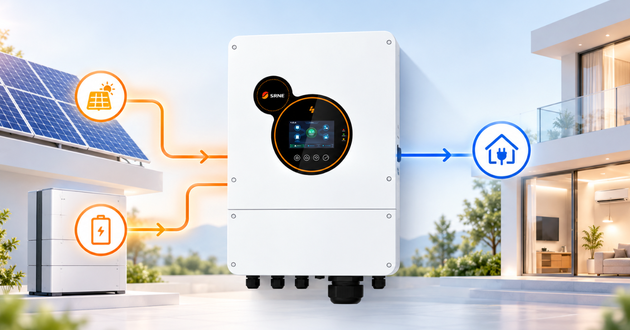
The watt rating is an important factor when choosing a solar inverter, but it is not the only consideration. The right capacity depends on household electricity demand, solar system size, battery configuration, and whether backup power is required.
For example, a 3000W inverter may be suitable for a small or medium residential system, while homes with higher loads or future expansion plans may need a larger capacity. The key is selecting an inverter that matches actual energy needs rather than simply choosing the highest wattage available.
Continuous Power Rating
Continuous power represents the amount of electricity an inverter can provide during normal operation. It determines the total load that can run steadily at the same time, such as lighting, refrigerators, computers, and other household equipment. When sizing an inverter, users should focus on their typical daily power consumption to avoid selecting a system that is either insufficient or unnecessarily oversized.
Surge Power Rating
Surge power refers to the temporary extra output available when appliances require more energy during startup. Equipment with motors or compressors, including air conditioners, pumps, and refrigerators, often needs a higher initial power supply than during regular operation. A suitable surge capacity helps maintain stable performance when these devices start.
Choosing the right watt inverter means balancing continuous power, startup requirements, and future energy needs to create a reliable home solar system.
How Many Watts Does a Home Solar Inverter Need?
The right inverter size depends on how much electricity a home uses, the size of the solar array, and whether battery storage or backup power is required. There is no universal watt rating that fits every residential application, because different homes have different energy patterns and load requirements.
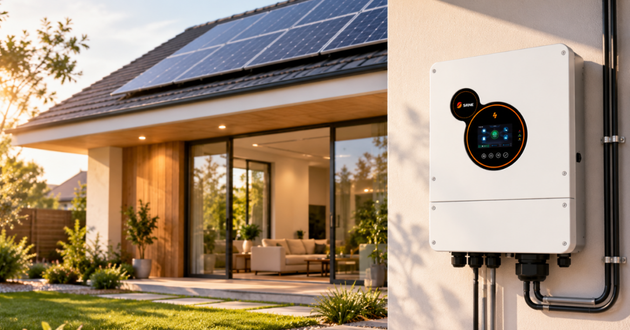
For most homeowners, the inverter capacity should be selected based on the appliances that need to operate at the same time, rather than simply adding up every device in the house. A properly sized home solar inverter can provide reliable power while leaving room for future system upgrades.
Home Application | Recommended Inverter Size | Typical Loads |
Small residential system | 2-3kW | Lighting, communication devices, small appliances |
Standard home solar system | 3-6kW | Refrigerators, household electronics, air conditioners |
Larger home or backup application | 8-12kW | Multiple high-power appliances and backup loads |
For a small home with basic electricity needs, a lower-power inverter may be sufficient. Medium-sized homes with higher daily consumption often require 3-6kW systems, while larger residences or homes with backup requirements may need higher-capacity solutions.
When planning a solar system, it is also important to consider future changes, such as adding more appliances, expanding solar panels, or integrating battery storage. Choosing a suitable inverter size from the beginning can improve system flexibility and reduce the need for later replacement.
2000W vs 3000W vs 5000W Solar Inverter: Which One Is Right?
The watt rating of an inverter determines the amount of power available for household loads at any given moment. A 2000W, 3000W, or 5000W inverter may look similar in function, but they are designed for different energy requirements.
The right choice depends on more than the number shown on the label. Daily electricity consumption, appliance startup requirements, solar array size, and battery plans all affect the suitable inverter capacity. In many cases, choosing a slightly higher capacity can provide more flexibility for future changes, while oversizing the system may increase unnecessary costs.
1.2000W Solar Inverter
A 2000W inverter is commonly used in smaller residential solar applications where the main goal is to keep essential equipment running. It can support basic loads such as lighting, communication devices, televisions, and other low-power electronics.
For homes with limited electricity consumption or backup needs focused on critical devices, this power range offers a compact solution without adding excess system capacity.
2.3000W Solar Inverter
Moving up to a 3000W inverter provides more room for everyday household electricity use. It can support a broader range of appliances, including refrigerators, computers, entertainment equipment, and some heating or cooling loads depending on their power requirements.
This capacity is frequently considered for small and medium residential systems because it offers a practical balance between available power, installation investment, and daily usability.
3.5000W Solar Inverter
A 5000W inverter is intended for homes with higher electricity demand or more complex power requirements. With greater output capability, it can handle multiple appliances operating together and offers additional capacity for systems paired with battery storage.
For households expecting higher energy consumption, larger solar installations, or stronger backup capability, this power level provides more operating flexibility.
4.How to Choose Between 2000W, 3000W, and 5000W?
Selecting an inverter size starts with understanding how electricity is actually used in the home. Instead of calculating only the total appliance count, it is more important to identify which devices may run simultaneously and whether any equipment requires extra starting power.
Several points should be checked before making a decision:
Continuous load: the amount of power required during normal operation;
Startup power: the temporary increase needed by equipment such as motors and compressors;
PV input capacity: whether the inverter matches the planned solar panel configuration;
Battery compatibility: whether the inverter works with the selected storage system;
Expansion plans: whether future energy needs may increase.
A correctly sized inverter helps maintain stable operation while leaving enough flexibility for future upgrades. The goal is to build a balanced solar system that matches real energy usage rather than simply selecting the highest available watt rating.
Types of Solar Inverters for Home Applications
Solar inverters come in different designs to match various installation conditions and energy needs. Factors such as roof layout, electricity consumption, and the need for battery storage all influence which type of inverter is more suitable. In residential solar projects, string inverters, microinverters, and hybrid inverters are the three common solutions, each with its own approach to converting and managing solar energy.
1.String Solar Inverter
A string inverter connects multiple solar panels together and converts the combined DC output into AC electricity for household use. It is commonly installed in homes with simple roof structures and stable sunlight conditions, where solar panels operate under similar conditions. Due to its straightforward design, a string inverter is easier to install, maintain, and scale for many standard rooftop solar applications.
2.Microinverter
A microinverter is mounted directly on each solar panel, allowing individual modules to operate separately instead of relying on a single centralized unit. This design helps reduce the impact of shading, different roof angles, or variations between panels, while also enabling panel-level monitoring. However, the increased number of components can result in higher installation complexity compared with traditional inverter configurations.
3.Hybrid Solar Inverter
A hybrid inverter integrates solar conversion, battery charging, and energy management into one device. It can distribute solar energy directly to household loads, store excess electricity in batteries, and provide backup power when grid supply is interrupted. As more homeowners adopt solar-plus-storage solutions, hybrid inverters are becoming a key choice for improving energy utilization, backup capability, and overall system flexibility.
Key Factors to Consider When Choosing a Home Solar Inverter
Selecting a solar inverter involves more than matching the watt rating with household electricity consumption. Other factors, including solar input capability, battery compatibility, backup requirements, and future system expansion, also affect long-term performance and reliability.
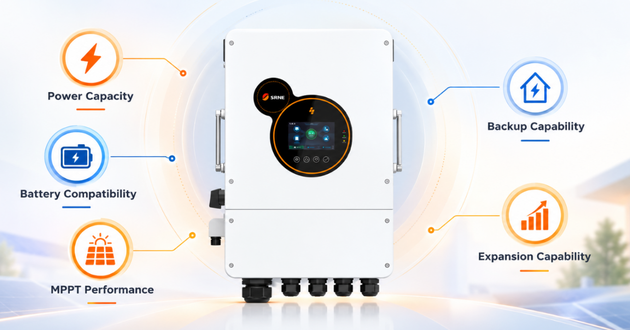
1.Power Capacity
The inverter capacity should match the actual electricity demand of the home. Instead of calculating only the total number of appliances, it is more important to understand which loads may operate at the same time and whether any equipment requires additional startup power. A properly sized inverter helps maintain stable operation without unnecessary oversizing.
2.Battery Compatibility
For systems with energy storage, battery compatibility plays an important role in overall system performance. The inverter should match the battery voltage, charging requirements, and communication protocols to ensure efficient energy management. Compatibility with options such as 48V battery systems can provide greater flexibility for residential solar storage applications.
3.MPPT Performance
MPPT technology allows the inverter to continuously adjust the operating point of solar panels to capture available energy more efficiently. Multiple MPPT channels can be especially useful for homes with different roof orientations, multiple solar arrays, or partial shading conditions, helping improve overall solar generation.
4.Backup Capability
For homeowners who need power availability during grid interruptions, backup capability becomes an important consideration. A backup-ready inverter should support stable switching, battery integration, and essential household loads to maintain electricity supply when the grid is unavailable.
5.Expansion Capability
A residential energy system may change over time as electricity consumption increases or additional solar and storage capacity is added. Features such as parallel operation, wider PV input capability, and flexible battery configuration allow the inverter to adapt to future system upgrades without requiring a complete replacement.
Grid-Tied, Off-Grid, or Hybrid: Which Inverter Type Fits Your Home?
The best inverter choice depends on how electricity is generated, stored, and used in a home. Some properties only need solar power conversion, while others require battery storage or backup capability for greater energy independence.
Before selecting an inverter, it is helpful to understand how grid-tied, off-grid, and hybrid systems differ.
System Type | Main Function | Typical Application | Battery Required |
Grid-Tied Solar System | Uses solar energy together with the utility grid | Homes with stable grid connection | Not always required |
Off-Grid Solar System | Provides independent electricity without relying on the grid | Remote homes, rural areas, standalone projects | Usually required |
Hybrid Solar System | Combines solar, battery storage, and grid interaction | Homes needing energy management and backup power | Recommended |
1.Grid-Tied Solar System
A grid-tied inverter connects a solar system with the local utility network. Solar energy is used to supply household loads first, while excess generation can be exported to the grid depending on local regulations and system design.
This type of setup is commonly selected for homes with reliable grid access where the main objective is improving solar utilization and reducing dependence on purchased electricity. Since it typically relies on the grid for stability, additional backup functions may require separate energy storage equipment.
2.Off-Grid Solar System
An off-grid inverter is designed for locations that cannot depend on a stable utility connection. It works together with batteries to store solar energy and maintain electricity availability when solar generation is limited, such as at night or during cloudy periods.
These systems are often used for remote residences, agricultural buildings, cabins, and other independent power applications where reliable standalone operation is more important than grid connection.
3.Hybrid Solar System
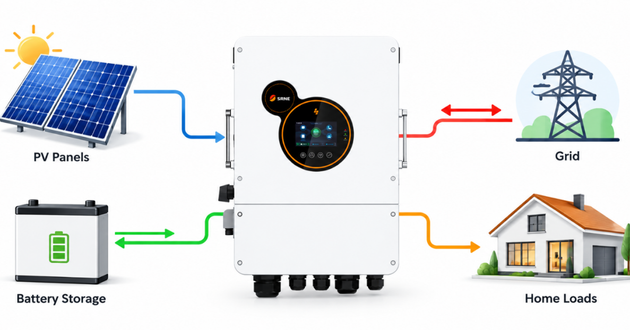
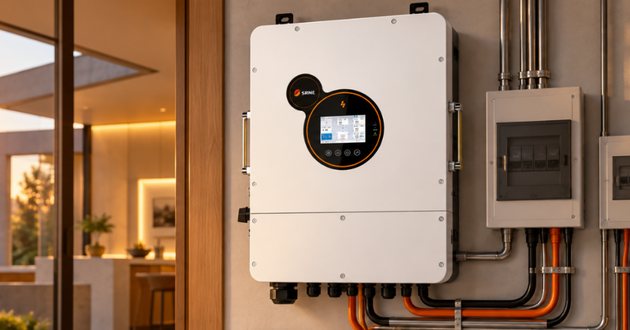
A hybrid solar system combines solar generation, battery storage, and grid connection within one energy solution. A hybrid inverter manages energy flow between solar panels, batteries, household loads, and the grid, allowing users to store surplus electricity and use it when needed.
This configuration is increasingly popular for residential energy storage because it provides greater control over solar consumption while supporting backup power during grid outages.
Recommended Watt Inverter Sizes for Different Home Solar Applications
The right inverter size depends on household electricity usage, solar generation capacity, battery configuration, and backup requirements. Different residential applications require different power ranges, from daily energy storage to larger homes with higher loads.
Application | Recommended Range | SRNE Product Example | Key Features |
Standard residential storage | 3-6kW | HESP 3-6kW EU | 48V battery, dual MPPT, 10ms backup switching |
Higher residential demand | 3-8kW | HESP 3-8kW EU | Three-phase output, 48V battery, dual MPPT |
Large single-phase homes | 8-12kW | Single Phase Low HESP 8-12kW EU | High output, AC coupling, generator port |
Large three-phase homes | 14-16kW | Three Phase Low HESP 14-16kW EU | Three-phase output, high PV input, 48V battery |
1.Standard Residential Storage: 3-6kW
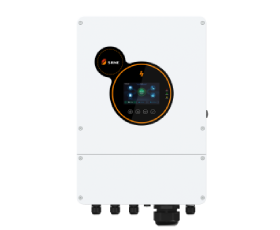
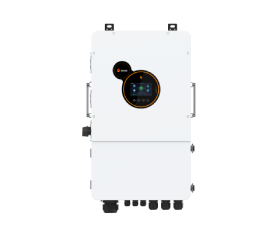
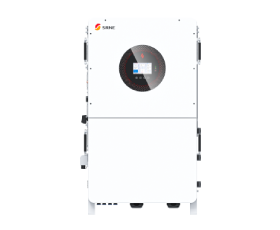
SRNE HESP 3-6kW Hybrid Inverter
For homes with moderate electricity consumption, a 3-6kW inverter is often enough to manage daily household loads while working with battery storage to improve solar self-consumption. This range is commonly used in residential projects where users want to store excess solar energy and maintain backup power for essential appliances.
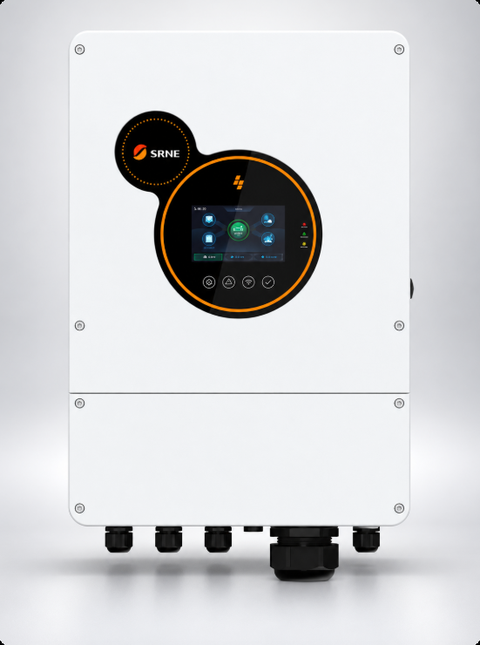
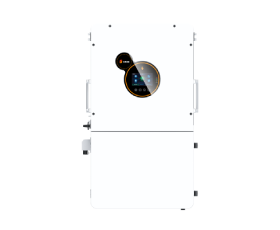
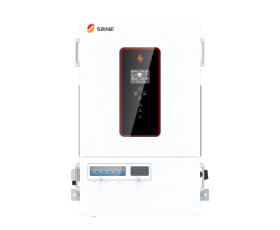
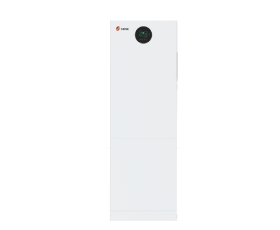
The HESP 3-6kW EU hybrid inverter from SRNE combines a 48V battery platform, dual MPPT inputs, and 10ms backup switching, making this power range practical for smaller rooftop solar systems and residential energy storage applications.
2.Higher Residential Demand: 3-8kW
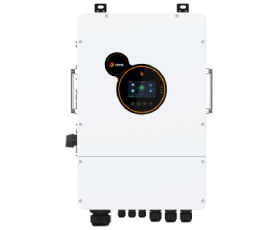
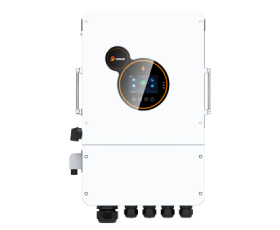
SRNE HESP 3-8kW Hybrid Inverter
When electricity usage increases or the solar array becomes larger, a higher-capacity inverter provides more room for household loads and energy management. The 3-8kW range is suitable for homes that require additional output while maintaining a flexible residential storage configuration.
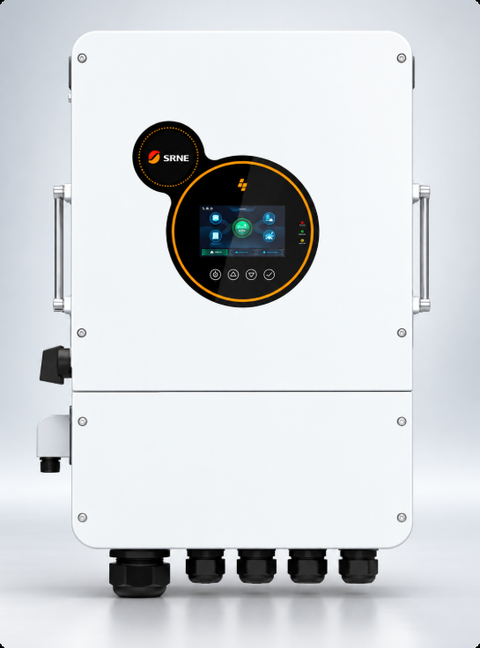
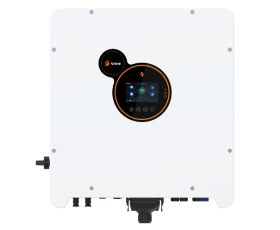
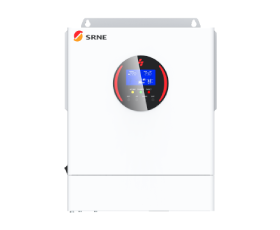
For these applications, SRNE’s HESP 3-8kW EU hybrid inverter adds features such as three-phase output, 48V battery compatibility, dual MPPT tracking, and generator integration, supporting more complex residential energy setups.
3.Large Single-Phase Homes: 8-12kW
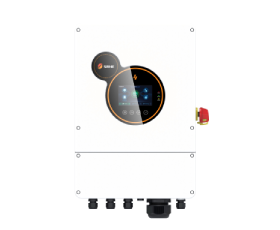
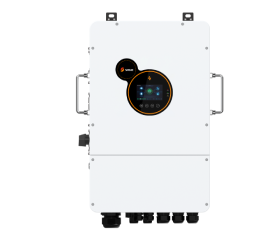
SRNE HESP 8-12kW Hybrid Inverter
Larger single-phase residences typically involve more simultaneous loads, which requires higher inverter output and stronger backup capability. An 8-12kW inverter provides additional capacity for larger PV systems, higher household consumption, and expanded battery storage.
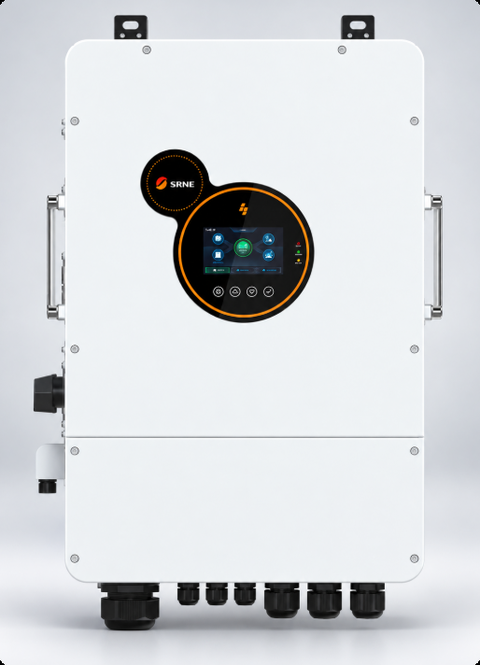
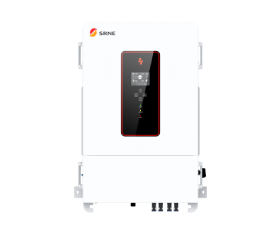
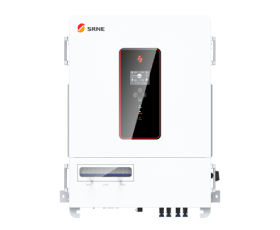
The Single Phase Low HESP 8-12kW EU hybrid inverter supports this type of application with 48V battery compatibility, dual MPPT inputs, AC coupling, and generator connection, allowing larger solar storage systems to be configured within a single-phase architecture.
4.Large Three-Phase Homes: 14-16kW
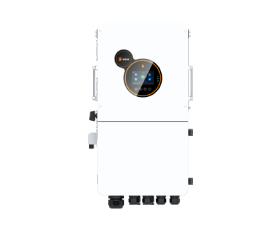
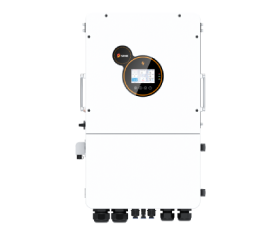
SRNE HESP 14-16kW Hybrid Inverter
For larger residential properties with three-phase power requirements, inverter selection focuses on higher output capacity, PV input capability, and stable energy management. These systems are commonly used where household electricity demand and solar generation are significantly higher.
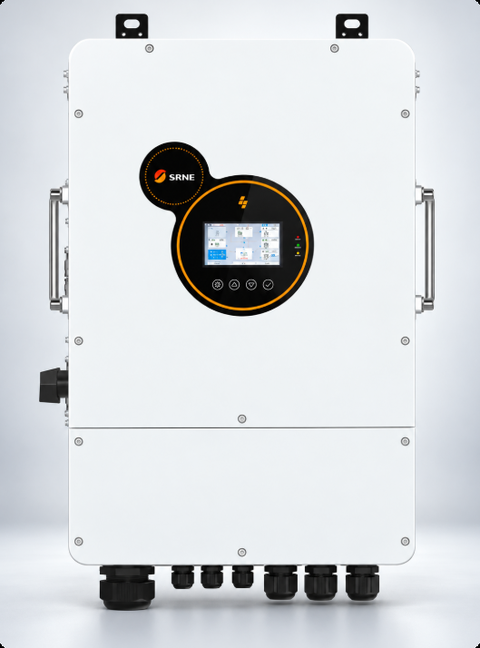
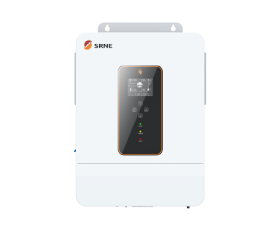
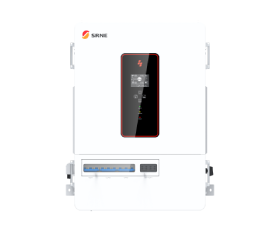
SRNE’s Three Phase Low HESP 14-16kW EU hybrid inverter provides three-phase output, dual MPPT tracking, and 48V battery integration. The 16kW model supports up to 32kW PV access power, allowing it to handle larger solar installations and higher-demand residential energy applications.
How SRNE Supports Residential Solar Energy Solutions
Selecting the right inverter is only one part of building a reliable solar energy system. Long-term performance also depends on product consistency, system compatibility, and the ability to adapt to different installation requirements.
With experience in solar and energy storage solutions, SRNE works with homeowners, installers, and distributors to develop inverter systems for different residential applications, including daily solar usage, energy storage, and backup power scenarios.
