













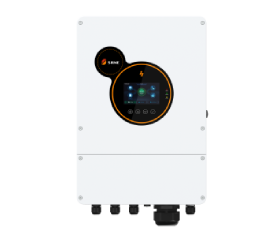
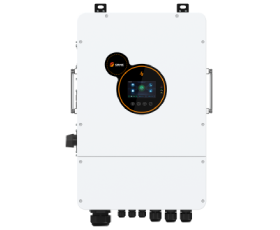

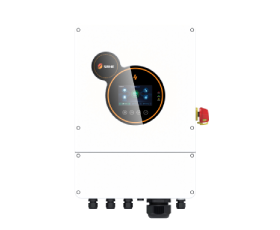
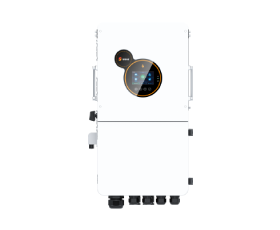

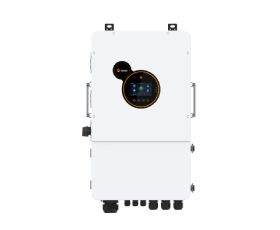

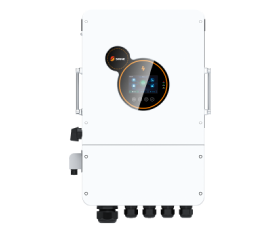

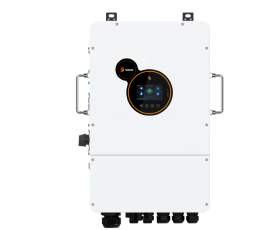
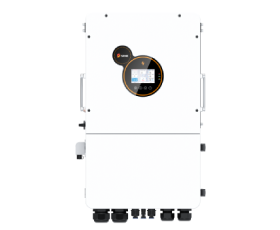

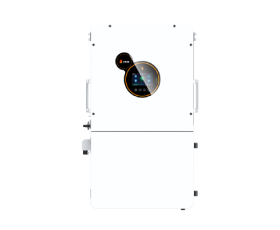
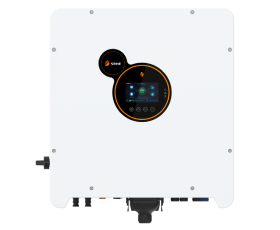
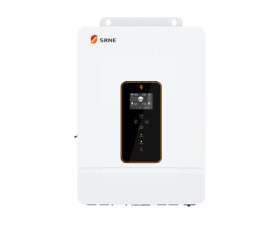

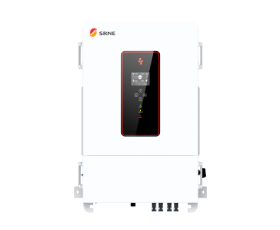
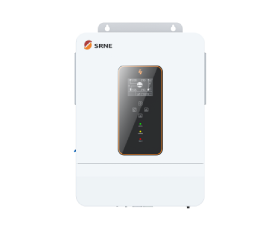
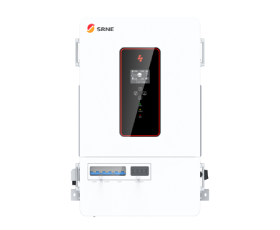

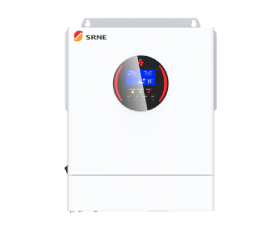

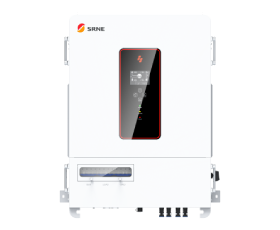


















Hybrid vs Off-Grid Inverter: Which One Do You Need?
Choosing between a hybrid inverter and an off-grid inverter depends on more than whether a property has access to electricity from the utility grid. Power reliability, battery storage requirements, and daily electrical demand all influence which system is more suitable.
This guide compares their operating differences, practical limitations, costs, and applications to help you choose the right inverter for your solar power system.
Hybrid Inverter vs Off-Grid Inverter: What Really Changes?
The main difference between a hybrid inverter and an off-grid inverter lies in how the system uses the utility grid. A grid-connected hybrid inverter can draw on grid power when solar generation and battery energy are insufficient, and export surplus electricity where permitted. An off-grid inverter, meanwhile, is designed to supply local loads without depending on a continuous grid connection.
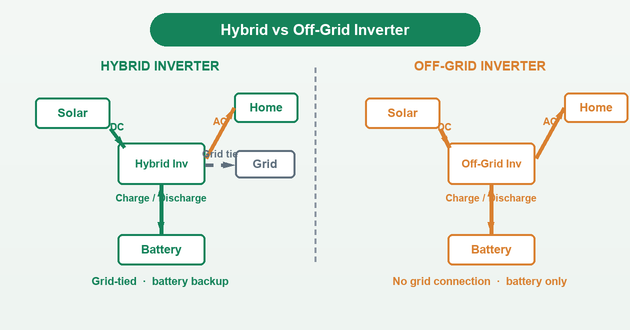
This distinction does not mean an off-grid inverter must operate without access to any external power source. In a Reddit r/SolarDIY discussion, a user questioned how grid input works on an off-grid inverter. Some models accept utility or generator power as an additional source, but their ability to receive AC electricity should not be confused with permission or capability to export power to the grid.
The U.S. Department of Energy (DOE) explains that localized electrical systems can operate independently of the main grid using local energy resources. Without the wider grid to support supply, an off-grid installation must be designed around the electricity its solar array, batteries, and available backup sources can reliably provide.
| Feature | Hybrid Inverter | Off-Grid Inverter |
| Primary Application | Grid-connected solar with storage and supported backup modes | Independent solar power systems |
| Utility Connection | Supports grid interaction according to model and certification | Not required for primary operation |
| Grid Export | Available on approved grid-interactive models | Generally not designed for grid export |
| Battery Storage | Supported on compatible models | Commonly central to independent solar operation |
| Operation Without Utility Power | Possible on models supporting islanded operation | Designed to supply local loads independently |
| Generator or AC Input | Model-dependent | Available on many models |
| Energy Management | Solar, battery and grid coordination | Solar, battery and auxiliary-source coordination |
| Typical System Priority | Flexible energy use with utility interaction | Local power availability without continuous grid dependence |
What Are the Practical Trade-Offs Between Hybrid and Off-Grid Inverters?
A hybrid inverter offers more flexibility where utility power is available. Depending on its operating modes, it can coordinate solar generation, battery storage, and grid electricity to manage daily consumption. An off-grid inverter gives greater priority to independent supply, but the installation must be able to handle changes in solar production and electrical demand without relying on a continuous grid connection.
That independence places greater demands on system planning. The IEA PVPS report Li-Ion Battery Systems in Off-Grid Applications emphasizes that reliable off-grid operation depends on appropriate system sizing, monitoring, and maintenance. Battery capacity alone cannot determine whether a system will meet its electricity needs throughout periods of reduced solar generation.
The trade-off also involves operating flexibility. A grid-connected hybrid system may use utility power to cover energy shortfalls, while an independently operating off-grid installation must rely on its available solar generation, battery reserves, or auxiliary sources. Neither arrangement guarantees continuous power under every condition; the better choice depends on the site's energy availability and required level of supply reliability.

How Do Hybrid and Off-Grid Solar Systems Compare in Cost?
Neither a hybrid nor an off-grid solar system is automatically cheaper. The total cost depends on the availability of utility power, the amount of battery storage required, and the equipment needed to maintain a reliable electricity supply.
1. Upfront System Costs
A grid-connected hybrid system can use utility electricity when solar and battery energy are insufficient, allowing storage capacity to be selected around the property's energy management and backup needs. An off-grid system may require larger battery reserves, additional solar generation, or generator support to operate independently, increasing its initial investment.
However, connecting a remote property to the utility grid can also be expensive. In a Reddit r/SolarDIY discussion about choosing off-grid solar instead of grid connection, a homeowner considered an off-grid installation after receiving a utility connection quote of approximately $13,000. The discussion highlights why the cost of obtaining grid access can be as important as the price of solar equipment.
2. Long-Term Operating Costs
Hybrid systems may reduce grid electricity purchases through battery storage, although their financial return depends on electricity tariffs, export compensation, and consumption patterns. Off-grid systems avoid routine dependence on utility electricity but may incur expenses for battery replacement, generator fuel, and equipment maintenance.
The IEA PVPS feasibility study guidance recommends assessing off-grid projects through technical and financial analysis that reflects their specific site conditions and constraints. Comparing installation costs, ongoing expenses, and future equipment replacement therefore provides a more reliable basis for evaluating the two systems than inverter price alone.
When Should You Choose an Off-Grid Inverter Over a Hybrid Inverter?
The choice depends on whether a solar system needs to operate independently or interact with the utility grid. A hybrid inverter is generally suitable for properties with grid access that want to manage solar generation, battery storage, and grid electricity. An off-grid inverter is more appropriate when independent power supply is the priority, particularly where grid access is limited, unreliable, or unnecessary.
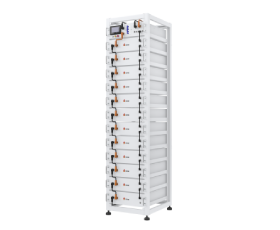
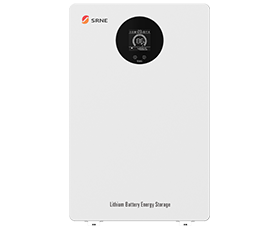
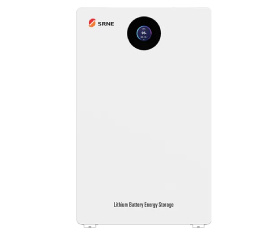
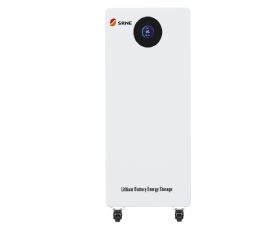
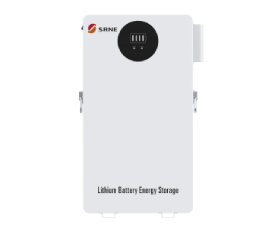
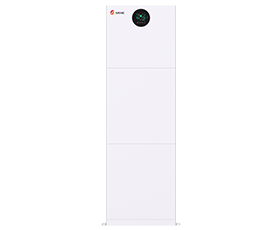
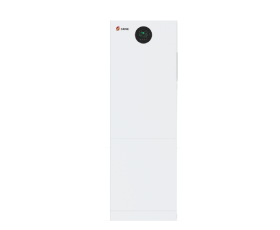
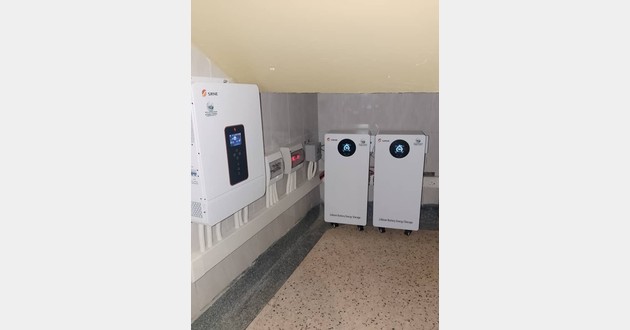
Electricity reliability is an important consideration for commercial facilities. According to the World Bank's 2025 Enterprise Survey data, approximately 80% of surveyed firms in Uganda reported experiencing power outages. For businesses such as shopping malls, an independent solar storage system offers a way to reduce reliance on continuous utility supply. In our small shopping mall project in Uganda, we installed an ASP 12kW off-grid solar storage inverter with two 16kWh-class battery units. The configuration combines solar power conversion with approximately 32kWh of nominal battery storage, enabling the mall to use solar generation and stored energy to support its daily electrical loads with less dependence on continuous grid power.

For similar installations, inverter output must be matched to the building's electrical demand, while battery capacity should reflect the energy required outside solar production hours. The SRNE ASP 12kW off-grid inverter series includes a Pro model with the following specifications.
SRNE ASP 12kW Off-Grid Inverter – Selected Specifications
| Specification | ASP48120S200-Pro |
| Rated Output Power | 12,000W |
| Maximum Peak Output | 24,000VA |
| AC Output | 230V, Single Phase |
| Battery Voltage | 48V |
| Maximum PV Input Power | 13.2kW |
| MPPT Trackers | 2 |
Selecting between hybrid and off-grid equipment ultimately comes down to the site's grid conditions and intended power supply requirements. In either case, the inverter's operating capabilities, battery compatibility, and electrical load requirements should be checked against the proposed system configuration.
Frequently Asked Questions About Hybrid and Off-Grid Inverters
1. Can an Off-Grid Inverter Work Without a Battery?
Some off-grid inverters support battery-free operation, allowing solar power to supply connected loads when sufficient sunlight is available. However, this capability depends on the specific model and its operating requirements. Without batteries or another suitable energy source, electricity supply may be interrupted when solar generation falls below the load demand.
2. Can a Hybrid Inverter Work Completely Off-Grid?
Yes, certain hybrid inverters can operate independently of the utility grid, provided they support off-grid operation and have suitable energy sources. However, not all hybrid models are designed for continuous standalone use. Before selecting one for an off-grid installation, verify its supported operating modes, battery requirements, and continuous output capability.
3. Is an Off-Grid Inverter More Efficient Than a Hybrid Inverter?
Neither inverter type is inherently more efficient. Conversion efficiency depends on the model, operating load, and power conversion path. A hybrid system may experience additional losses during battery charging and discharging, while an off-grid system can also incur storage and conversion losses. Comparing the manufacturer's efficiency specifications under equivalent conditions provides a more meaningful assessment.
4. Can Multiple Off-Grid Inverters Be Connected in Parallel?
Yes, off-grid inverters designed for parallel operation can be combined to increase available system capacity. However, this requires compatible models, appropriate communication and synchronization, and a correctly designed electrical installation. The supported number of units and single-phase or three-phase configurations should be checked in the manufacturer's specifications.
Conclusion
A hybrid inverter is generally better suited to systems that need grid interaction and flexible energy management, while an off-grid inverter is designed for applications where independent power supply takes priority.
The right choice depends on the site's power conditions, electrical loads, and storage requirements. For projects requiring independent solar power, explore SRNE's off-grid inverter solutions to compare suitable configurations.
References
https://iea-pvps.org/key-topics/t18-li-ion-battery-systems-2025/
https://iea-pvps.org/key-topics/blueprint-feasibility-off-grid-systems/
4. World Bank. Firms Experiencing Electrical Outages (% of Firms) — Uganda.
https://data.worldbank.org/indicator/IC.ELC.OUTG.ZS?locations=UG
5. Reddit — r/SolarDIY. Help Understanding Grid Input on Off Grid Inverters.
https://www.reddit.com/r/SolarDIY/comments/1ut86ci/help_understanding_grid_input_on_off_grid/
6. Reddit — r/SolarDIY. Off Grid Solar Instead of Grid Tie.
https://www.reddit.com/r/SolarDIY/comments/1tksppm/off_grid_solar_instead_of_grid_tie/
7. SRNE Solar. ASP 12kW Off-Grid Solar Storage Inverter — Official Product Specifications.
https://www.srnesolar.com/productdetail/Off-Grid-Inverter-ASP-12kW-EU.html
