






































How to Match a Lithium Battery with a Solar Inverter in Nigeria
Choosing a lithium battery for a solar inverter is not just about finding one with the right voltage or capacity. The battery also needs to deliver enough current, accept the inverter's charging output, and communicate properly with the battery management system (BMS). If these requirements do not match, you may encounter charging interruptions, inaccurate battery readings, or unexpected shutdowns.
This is particularly relevant in Nigeria, where an unreliable electricity supply has encouraged more households and businesses to consider solar-plus-storage systems. According to the World Bank Group and IFC's May 2025 Nigeria Country Private Sector Diagnostic, the country's electricity grid meets only 19.5% of domestic electricity demand. As battery storage becomes part of more power arrangements, choosing the right combination of inverter and battery is an important step in system planning.
So, how do you know whether a lithium battery will work with your solar inverter? The answer lies in its voltage, capacity, discharge capability, charging requirements, and BMS communication.
How Do You Check Lithium Battery Compatibility with a Solar Inverter?
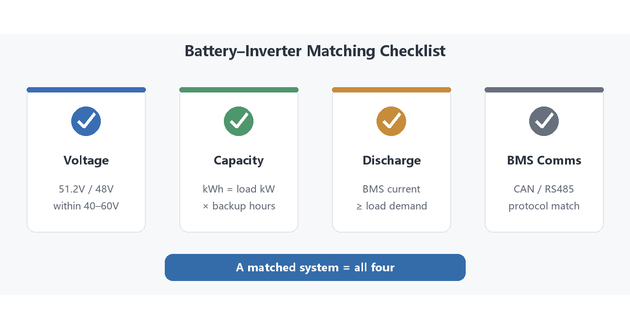
A lithium battery is compatible with a solar inverter when its electrical specifications and communication requirements meet the inverter's supported operating conditions. Matching the nominal voltage is a good starting point, but it does not guarantee that the two products will work together. You also need to consider the battery's charging voltage, continuous discharge current, and BMS communication requirements.
When comparing products, look at their complete specifications together. A 48V battery may match the inverter's nominal voltage but still have an unsuitable charging limit or insufficient discharge current. Similarly, two products with CAN ports may use different communication protocols. These differences can affect system operation, so compatibility should be confirmed for the exact battery and inverter models before purchasing.
What Voltage Lithium Battery Do You Need for a 12V, 24V, or 48V Solar Inverter?
The battery voltage needs to match the DC battery architecture of the inverter. Common low-voltage systems use 12V, 24V, or 48V configurations, while larger storage installations may use high-voltage battery systems.
For 48V-class solar inverters, 51.2V LiFePO4 batteries are widely used. However, nominal voltage alone does not tell us whether a battery is suitable. Its actual operating range and charging voltage also matter. For instance, the Volta household LiFePO4 battery guide available through Nigeria's electricity management authority lists a 51.2V nominal battery with a 48–57.6V operating range.
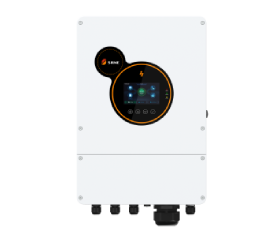
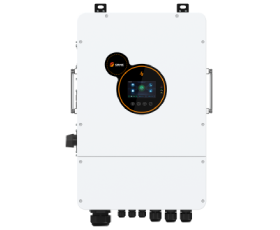
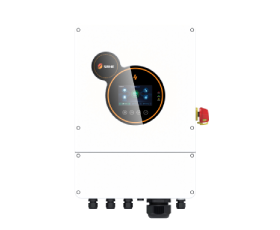
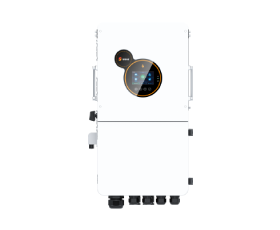
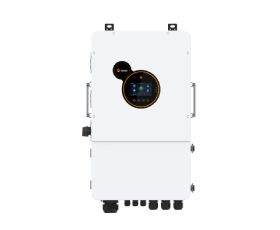
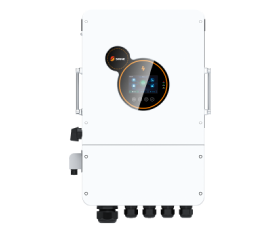
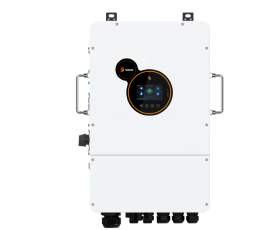
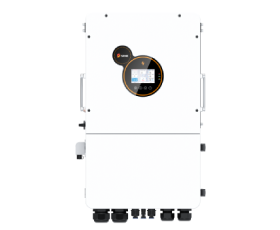
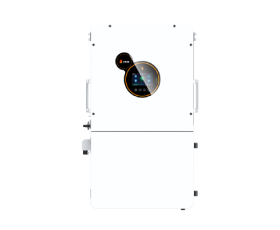
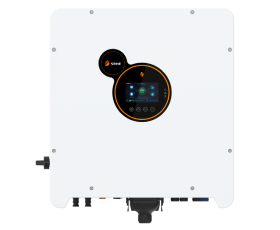
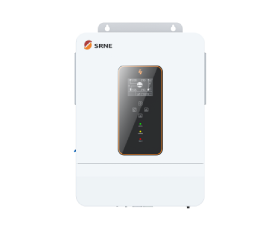
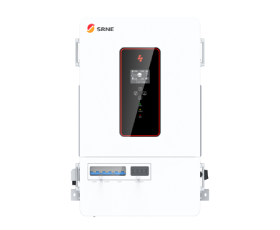
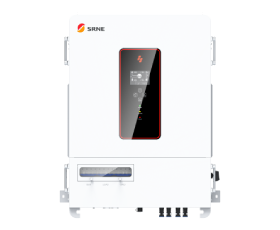
The 16kW hybrid inverter uses a rated 48V battery system with a 40–60Vdc operating range. A 51.2V battery falls within this voltage architecture, but its charging limits, discharge capability, and BMS communication still need to be considered before confirming compatibility.
What Size Lithium Battery Do You Need for Your Solar Inverter?
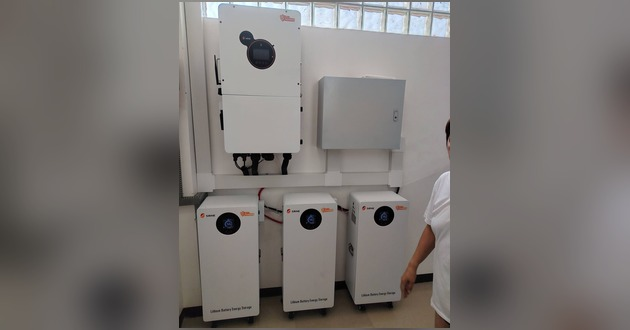
The right battery capacity depends on how much electricity your equipment consumes and how long you need it to operate during a power interruption. A higher inverter power rating does not automatically mean you need a larger battery. The actual load and required backup duration should determine the storage capacity.
How Do You Calculate the Required Battery Capacity?
A simple way to estimate battery capacity is to multiply the average load by the required backup time.
Required usable battery energy (kWh) = Load power (kW) × Backup time (hours)
For example, if a home or small business uses an average of 5kW and needs four hours of backup, it requires 20kWh of usable battery energy. Assuming an 80% usable depth of discharge, the nominal battery capacity would be approximately 25kWh, before accounting for inverter conversion losses.
This is an initial estimate rather than a final system design. Actual consumption may vary throughout the day, so it is worth distinguishing essential loads from equipment that does not need to run during a power interruption.
Can Your Lithium Battery Supply Enough Current for the Inverter?
Battery capacity tells us how much energy is stored, but it does not indicate how much power the battery can deliver at one time. That depends on the battery cells and the maximum continuous discharge current allowed by the BMS.
For example, a 5kW AC load supplied by a 48V battery system at an assumed 92% inverter efficiency requires approximately 113A of DC current:
5,000W ÷ (48V × 0.92) ≈ 113A.
If one battery supports a continuous discharge current of only 100A, it may not be able to supply this load on its own. Additional compatible battery modules may be needed, provided the battery system supports parallel operation.
This is particularly important with higher-power equipment. The HESP48160S340-H has a maximum battery charging and discharging current rating of 340A. The connected battery bank needs sufficient current capability to support the intended load without exceeding its own BMS limits. A battery may have enough stored energy but still restrict the power available from the inverter.
Does Your Solar Inverter Need CAN or RS485 Communication with a Lithium Battery?
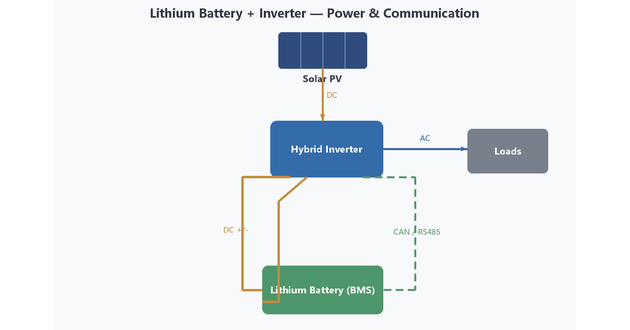
CAN and RS485 are commonly used to connect a lithium battery's BMS with a solar inverter. Through a compatible communication protocol, the battery can send information such as voltage, current, state of charge (SOC), and charging or discharging limits to the inverter.
This information helps the inverter manage battery operation. For example, when the battery reaches its permitted charging limit, the BMS can communicate that restriction so the inverter can adjust its charging output. However, having the same CAN or RS485 port does not automatically make two products compatible. The communication protocol, data format, and cable pin assignment also need to match.
The 16kW hybrid inverter supports both CAN and RS485 communication options, with selectable battery protocols. When choosing a third-party lithium battery, the important question is whether its specific BMS protocol is supported, not simply whether it has the same type of port.
Can You Use a Lithium Battery Without BMS Communication on a Solar Inverter?
Yes, some hybrid inverters support lithium battery operation without active BMS communication. In this arrangement, the inverter uses manually configured voltage and current parameters rather than relying on continuous information from the battery.
With BMS communication enabled, the inverter can receive battery operating information and changing current limits. Without it, settings such as charging voltage, maximum charging current, and low-voltage cut-off need to be configured manually. The inverter may also lose access to real-time SOC information and other battery status data, which can affect monitoring and charging control.
The 16kW hybrid inverter includes a Disable option for BMS communication and a USER define battery configuration. These options provide an alternative to communication-based operation, but they do not mean every lithium battery can be connected without BMS communication. The battery must support this operating method, and its internal protection system must remain active.
What Settings Should You Check When Connecting a Lithium Battery to a Solar Inverter?
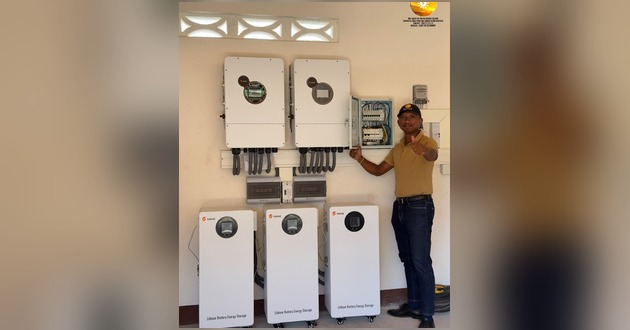
Once the battery and inverter are matched, their operating parameters need to be configured correctly. The main settings include battery type, charging voltage, maximum charging current, discharge limits, and low-voltage protection. Together, these determine how the battery charges, how much current it can supply, and when the inverter stops drawing energy from it.
Maximum charging current deserves particular attention. An inverter may be capable of delivering more current than a particular battery bank can accept. If the charging limit is set too high, the battery BMS may trigger protection or interrupt charging. The same applies to discharge current, which must remain within the battery's permitted operating range.
The 16kW hybrid inverter offers three charging-current limit modes: HMI setting, BMS setting, and inverter setting. When BMS-based control is used, the battery's reported current limit becomes an important reference. Charging voltage and low-voltage cut-off should also reflect the battery's actual requirements rather than settings copied from another 48V battery.
Why Is Your Solar Inverter Not Communicating with the Lithium Battery?
When a solar inverter fails to recognize a connected lithium battery, the problem is not necessarily a defective battery or inverter. In many cases, the cause is a communication cable with the wrong pin assignment, an unsupported BMS protocol, or an incorrect battery configuration.
Start with the physical connection. Some batteries and inverters use RJ45 connectors for CAN or RS485, but the pin assignments can differ between manufacturers. A cable may fit both ports while still having incorrect wiring. The communication protocol is another common source of problems: selecting CAN on the inverter will not resolve the issue if the battery uses a different protocol.
If the connection and protocol are correct, look at the battery's operating status and communication settings. Systems with multiple battery modules also need the correct master/slave arrangement and communication addresses. Incorrect settings can affect the SOC information received by the inverter. If the problem persists, the inverter model, battery model, firmware version, selected protocol, and fault code can help identify where the problem originates.
Frequently Asked Questions
Why Does My Solar Inverter Have a CAN Port but Still Not Recognize My Lithium Battery?
A matching CAN port does not guarantee that the battery and inverter use the same communication protocol. The cable pin assignment may also be incorrect. Check the supported BMS protocol and connection requirements for both products before changing the configuration.
Can I Use a Normal Ethernet Cable for Lithium Battery Communication?
Not necessarily. Some batteries and inverters use RJ45 connectors for CAN or RS485 communication, but their pin assignments may differ from standard Ethernet wiring. A normal network cable should not be assumed to work unless its wiring matches the equipment requirements.
Why Does My Solar Inverter Show the Wrong Battery SOC After Connecting Multiple Lithium Batteries?
This may happen when the battery modules are not communicating correctly with each other or with the inverter. Incorrect master/slave configuration, battery addresses, or BMS communication settings can affect the SOC information received by the inverter. The battery manufacturer's parallel connection requirements also need to be considered.
Can I Add Another Lithium Battery to an Existing Solar Inverter System?
Yes, provided the inverter and battery system support the additional module. The new battery needs to meet the requirements for voltage, chemistry, capacity, BMS communication, and parallel operation. Batteries with different ages or capacities should not be combined unless the manufacturer explicitly permits it.
What Information Should I Provide When Checking Lithium Battery Compatibility?
Start with the exact inverter and battery models, their datasheets, nominal voltage, charging and discharging limits, and BMS communication protocol. If you are expanding an existing system, include the number of batteries already connected and their configuration. This information helps the manufacturers determine whether the proposed combination is suitable.
Conclusion
Choosing a lithium battery for a solar inverter requires more than matching the nominal voltage. Its usable capacity, discharge current, charging limits, and BMS communication all affect how the complete system operates.
For solar storage projects in Nigeria, these considerations are particularly important when combining batteries and inverters from different manufacturers or expanding an existing battery bank. A battery may have enough stored energy but still be unsuitable if its BMS cannot support the required current or communicate correctly with the inverter.
The best approach is to consider battery capacity, power requirements, and communication compatibility together. This gives you a clearer basis for selecting a lithium battery that works with your solar inverter and the loads you intend to operate.
References
World Bank Group / IFC – Nigeria Country Private Sector Diagnostic, May 2025https://www.ifc.org/content/dam/ifc/doc/2025/nigeria-country-private-sector-diagnostic-en.pdf
Volta – LiFePO4 Battery System for Households: User Guidehttps://nemsa.gov.ng/wp-content/uploads/formidable/67/Volta-Li-on-Battery-User-Guide.pdf
SRNE – HESP 14–18kW EU Single-Phase Hybrid Inverter Product Pagehttps://www.srnesolar.com/productdetail/Hybrid-Inverter-HESP-14-18kW-EU.html
SRNE – HESP 14–18kW EU Single-Phase Hybrid Solar Inverter User Manualhttps://www.srnesolar.com/userfiles/files/2026/01/05/SRNE_HESP48180S380-H%2814-18kW%29_EU_Single-phase_%20Hybrid%20_Solar%20Hybrid%20Inverter_User%20Maunal_V00%5B20251219%5D.pdf
International Electrotechnical Commission – IEC 62619:2022https://webstore.iec.ch/en/publication/64073