






































How Do Solar Inverters Work?
Solar inverters play an essential role in turning electricity generated by solar panels into usable power for homes. Beyond basic conversion, they also influence how electricity is delivered, stored, and managed across different solar systems.
So, how do solar inverters actually work? This guide explains the key processes behind solar power conversion, household electricity supply, battery storage, and the factors that affect inverter performance.
What Is a Solar Inverter?
According to the U.S. Department of Energy (DOE), a solar inverter is a power electronic device that converts direct current (DC) generated by photovoltaic panels into alternating current (AC) used by electrical grids and household appliances. It also plays a role in regulating the flow of electrical power within a solar energy system.
Beyond conversion, modern solar inverters may provide system monitoring, grid synchronization, and battery-related functions, depending on their design. These capabilities support different applications, including grid-connected solar installations, off-grid power systems, and solar energy storage.
How Does a Solar Power Inverter Convert DC to AC?
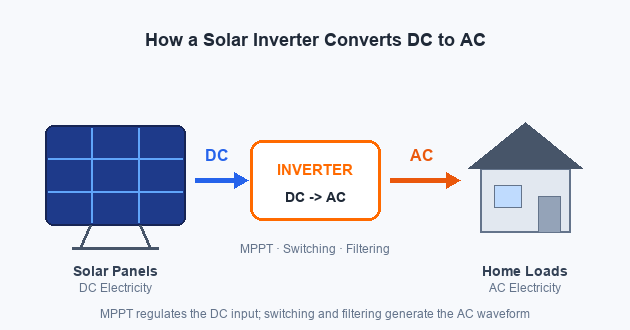
A solar power inverter converts DC electricity from photovoltaic panels into AC power by regulating the incoming energy and controlling electronic switches to generate the required output waveform.
1.DC Input and Maximum Power Point Tracking
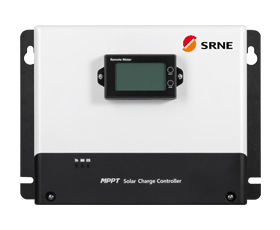
Solar panels deliver DC electricity through connected strings or arrays, with voltage and current varying according to sunlight, temperature, and shading. Maximum Power Point Tracking (MPPT) adjusts the panels' operating point to obtain the greatest available power under these changing conditions.
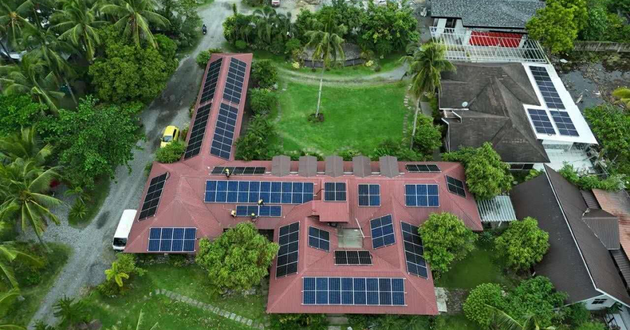
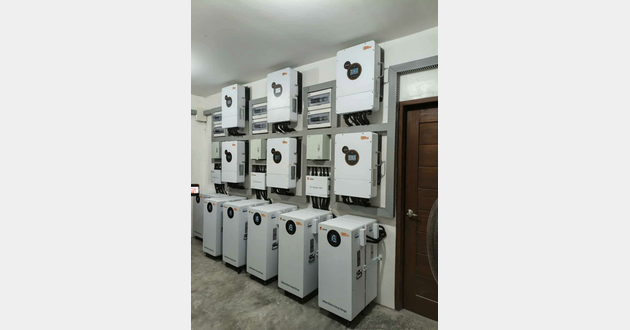
In a Philippine residential solar installation, 112 panels rated at 610W provide 68.32kWp of installed PV capacity. The six HESP 12kW hybrid inverters receive power from the connected solar arrays, with MPPT helping them respond to changes in available solar energy rather than operating at a fixed input point.
The array's rated capacity does not represent its continuous output. Inverters equipped with multiple independent MPPT inputs can also manage PV strings with different orientations or shading conditions, allowing each MPPT group to operate at a suitable voltage.
2.Power Switching and AC Output
The inverter uses semiconductor switches to turn the conditioned DC input into an alternating waveform. In many designs, pulse-width modulation (PWM) controls the switching pattern, while output filters reduce high-frequency components to produce suitable AC power.
Voltage and frequency are regulated to match the connected electrical system. For instance, an inverter supplying a 230V, 50Hz system must maintain compatible output characteristics within its operating limits.
How Does a Home Solar Inverter Supply Electricity?
In a home solar system, the inverter's output capacity determines how much AC power it is rated to deliver to connected electrical loads. A larger household with multiple high-power appliances may require greater inverter capacity to accommodate their combined electricity demand.
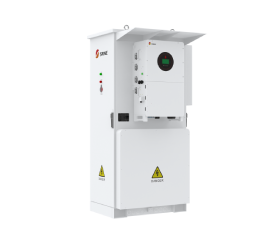
In the residential system mentioned earlier, we configured six HESP 12kW hybrid inverters, providing a combined nominal inverter capacity of 72kW. With a suitable multi-inverter configuration, the system can accommodate greater aggregate household loads, while actual output depends on available energy and operating conditions.
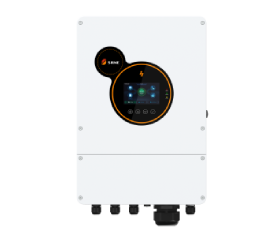
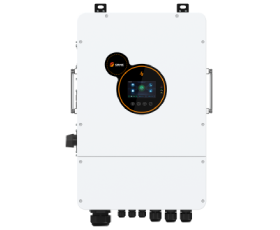
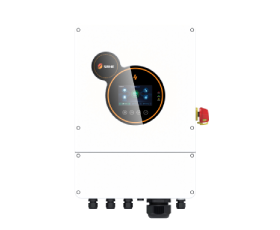
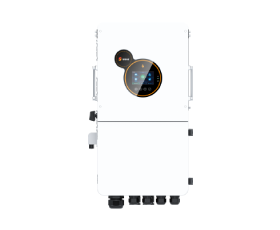
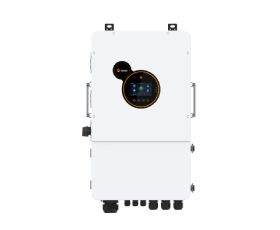
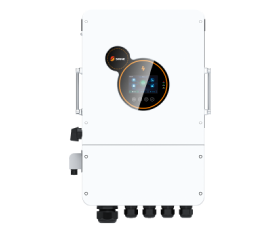
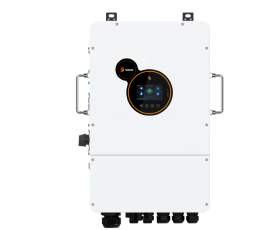
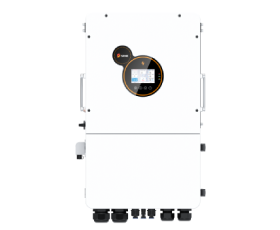
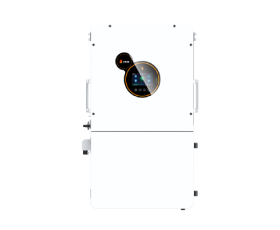
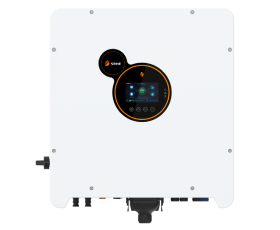
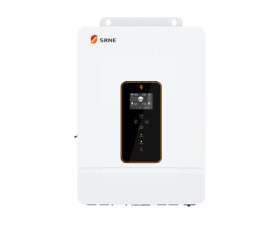
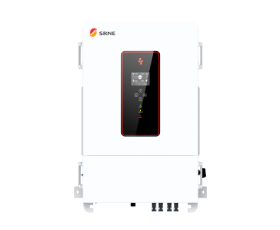
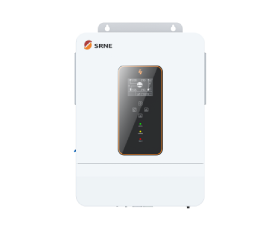
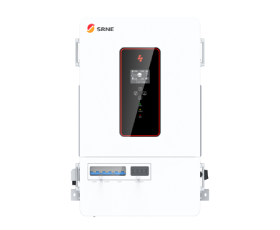
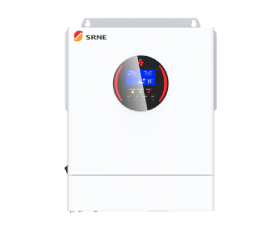
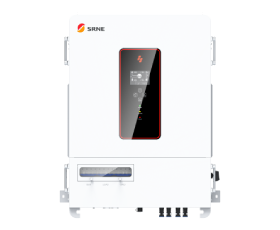
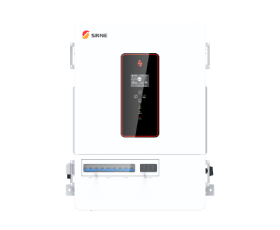
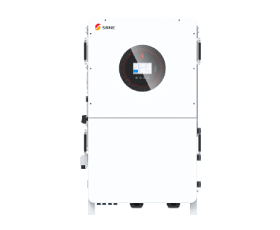
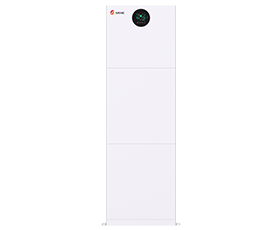
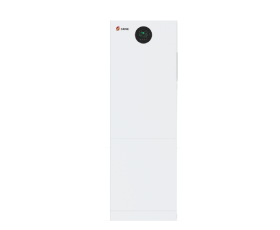
The SRNE HESP 12kW hybrid inverter series combines solar power conversion, battery integration, and energy management functions. Selected models support dual MPPT tracking and multi-unit parallel operation, making the series suitable for residential installations that require greater power capacity and flexible solar storage configurations.
| Specification | HESP 12kW Hybrid Inverter |
| Rated Output Power | 12kW |
| Peak Output | Up to 24kVA |
| Battery Platform | 48V |
| MPPT Trackers | 2 |
| Solar Input | Model-dependent |
| AC Output | Single-phase or three-phase, depending on model |
| Battery Integration | Supported |
| Multi-Inverter Operation | Supported with compatible configuration |
In grid-connected systems, solar-generated electricity can supply household loads, while the utility grid covers any shortfall when solar production is insufficient. Surplus power may be exported where permitted. As explained by the U.S. Department of Energy (DOE), grid-connected inverters coordinate their output with the electrical grid, including its voltage and frequency, to operate correctly.
During a utility outage, conventional grid-following inverters stop energizing the grid-connected circuit to prevent unintended islanding. Backup-capable hybrid inverters may continue supplying designated household circuits when suitable energy storage and electrical isolation are available.
How Does a Solar Storage Inverter Work with Batteries?
A solar storage inverter coordinates power flow between solar panels, batteries, and household loads. This allows solar energy to be stored for later use, with charging and discharging controlled according to the system's operating mode and battery requirements.
1.How Solar Energy Is Stored in Batteries
In a DC-coupled hybrid system, solar electricity can supply household loads and charge batteries through regulated DC conversion circuitry. AC-coupled systems typically use a separate battery inverter or charger to convert AC electricity into DC power for storage.
For lithium batteries, the Battery Management System (BMS) monitors voltage, current, temperature, and state of charge. These measurements and operating limits help compatible charging equipment manage the charging process safely.
2.How Stored Energy Supplies Household Loads
Once stored, battery energy can be used when solar generation is insufficient or household demand increases. A compatible hybrid inverter converts the battery's DC power into AC electricity, with discharge controlled by the selected operating settings.
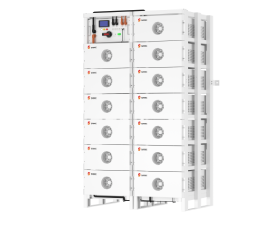
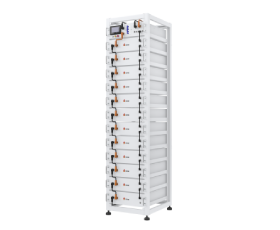
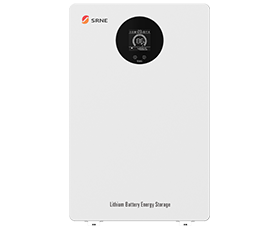
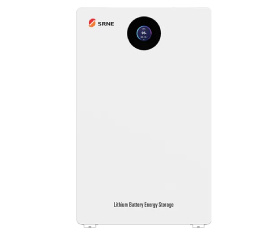
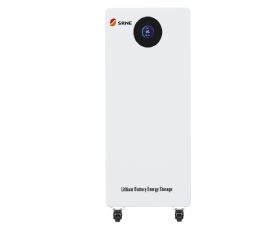
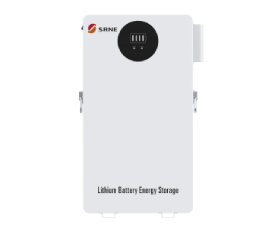
The residential project mentioned above was equipped with more than just the hybrid inverters. We also integrated twelve SE16B Pro lithium batteries, providing a total rated storage capacity of 180kWh. While the inverters handle power conversion, the batteries provide an energy reserve for household consumption beyond periods of sufficient solar generation.
Battery capacity is measured in kilowatt-hours (kWh), rather than the kilowatts (kW) used to describe inverter power. For example, a continuous 10kW load consumes 10kWh of energy in one hour. Actual battery runtime depends on usable capacity, conversion losses, discharge limits, and household consumption.
Stored energy may also be reserved for backup use. However, supplying electricity during a grid outage requires an inverter with suitable backup functionality and an installation with proper electrical isolation.
What Affects Solar Inverter Power Output?
A solar inverter does not always operate at its rated power. Actual AC output depends on the electricity available from the PV array, conversion efficiency, and the inverter's operating limits.
According to the U.S. Department of Energy (DOE), solar panel performance is influenced by solar irradiance and temperature. Higher cell temperatures generally reduce panel voltage and available power, which can affect the electricity supplied to the inverter.
The main factors affecting solar inverter power output include:
| Factor | How It Affects Power Output |
| Solar Irradiance | Changes the DC power available from the solar panels as sunlight intensity varies. |
| Panel Temperature | Higher cell temperatures generally reduce PV module voltage and available output. |
| Conversion Efficiency | Some energy is lost during DC-to-AC conversion, reducing the AC power delivered. |
| Inverter Power Rating | The inverter's rated AC capacity limits its continuous output under specified conditions. |
| Operating Temperature | High internal temperatures may cause the inverter to reduce output to protect its components. |
| System Operating Settings | Grid export restrictions, configured power limits, and battery charging may affect AC power delivery. |
The National Renewable Energy Laboratory (NREL) also accounts for inverter efficiency and output limits in its PVWatts performance model. When the calculated AC output exceeds the inverter's rated capacity, the model limits output to that rating, a phenomenon known as inverter clipping.
In hybrid systems, part of the available solar energy may be directed toward battery charging rather than immediate AC output. Therefore, AC output alone does not necessarily represent all the solar energy being used.
Monitoring data should also distinguish instantaneous power (kW) from accumulated energy production (kWh), as these measurements describe different aspects of system performance.
Understanding these factors helps explain normal changes in inverter output without treating every variation as an equipment fault.
Frequently Asked Questions About Solar Inverters
1.Can a Solar Inverter Work Without a Battery?
Yes. A solar inverter can operate without battery storage, particularly in grid-connected solar systems. It converts electricity from solar panels into AC power for household use, while the utility grid supplies additional electricity when solar generation is insufficient.
However, battery requirements vary by inverter type. Some off-grid and hybrid inverters require a compatible battery for certain operating modes, while others support battery-free operation under specified conditions. Always check the inverter's technical specifications before designing the system.
2.Do Solar Inverters Work at Night?
Solar panels produce little or no usable electricity at night, so a conventional PV-only inverter cannot generate solar power after sunset.
However, a solar storage inverter connected to compatible batteries may continue supplying household loads using previously stored energy. Grid-connected hybrid inverters may also draw electricity from the utility grid, depending on their operating settings.
The inverter's ability to remain active at night therefore depends on its design and available energy sources, rather than sunlight alone.
3.Can a Power Inverter for Home Backup Work During an Outage?
Yes, but only if the inverter supports backup operation and the electrical system is configured for it.
A conventional grid-tie inverter normally stops energizing the grid-connected circuit during a utility outage to prevent unintended islanding. A power inverter for home backup, such as a backup-capable hybrid inverter, may continue supplying designated loads when suitable battery storage and electrical isolation are available.
The appliances that can operate during an outage depend on the inverter's backup output rating, battery discharge capability, and connected load demand. A battery alone does not guarantee uninterrupted electricity.
4.Does a Solar Inverter Need a Grid Connection?
Not necessarily. Whether a solar inverter requires a utility grid depends on its operating design.
Grid-tie inverters normally synchronize with an active utility grid, while off-grid inverters establish AC power for independent electrical systems. Some hybrid models support both grid-connected operation and isolated backup power, provided the necessary equipment and operating conditions are met.
For homes without reliable grid access, the inverter must be capable of maintaining a stable electrical supply independently rather than relying on grid synchronization.
Conclusion
Solar inverters do more than convert DC electricity into AC power. Their ability to regulate output, work with the utility grid, and integrate with battery storage determines how solar energy is used under different operating conditions.
Understanding these functions can help homeowners and installers better evaluate solar system configurations and performance. For projects involving residential solar generation and energy storage, explore SRNE's solar inverter solutions to find suitable options for different power and storage requirements.
References
1. U.S. Department of Energy (DOE). Solar Photovoltaic System Design Basics.
https://www.energy.gov/cmei/systems/solar-photovoltaic-system-design-basics
2. U.S. Department of Energy (DOE). Solar Integration: Inverters and Grid Services Basics.
https://www.energy.gov/cmei/systems/solar-integration-inverters-and-grid-services-basics
3. U.S. Department of Energy (DOE). Solar Photovoltaic Performance and Efficiency Basics.
https://www.energy.gov/cmei/systems/solar-photovoltaic-performance-and-efficiency-basics
