







































Can You Run a Solar Inverter 24 Hours a Day?
This article explains how long an inverter can run, how hybrid inverters support 24/7 energy management, and what practices help maintain reliable long-term performance.
Can an Inverter Run Continuously for 24 Hours?
Yes, an inverter can operate continuously for 24 hours or longer when it is properly selected and used within its rated specifications. The actual runtime depends on the entire energy system, including power demand, available energy sources, and operating conditions.
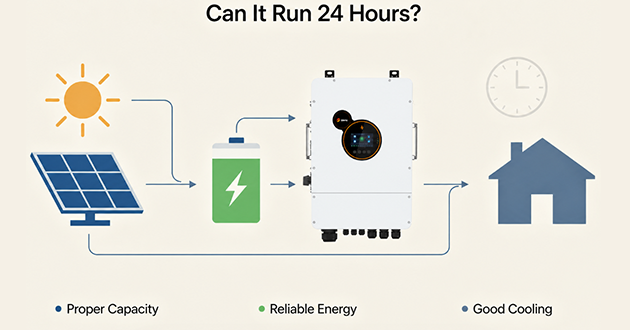
A stable 24/7 operation requires a suitable inverter capacity, reliable power supply from solar or batteries, and proper installation with adequate cooling. When these factors are balanced, the inverter can provide consistent power conversion for long-term use.
What Determines How Long a Solar Inverter Can Run?
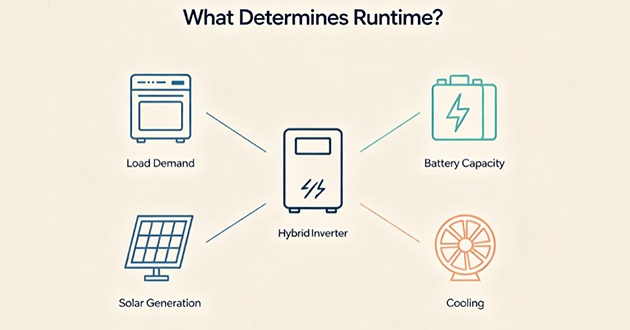
The operating time of a solar inverter or hybrid inverter is influenced by the entire energy system, not just the inverter itself. Load demand, available battery energy, solar generation, and installation conditions all determine how long power can be supplied continuously.
A well-matched system allows the inverter to operate within a suitable range while maintaining stable conversion efficiency and reliable output.
1.Inverter Power Rating and Load Demand
The inverter’s rated power defines the maximum load it can support during operation. However, the actual power requirement depends on the equipment connected to the system. Appliances with motors, compressors, or high startup currents may temporarily demand much more power than their normal running consumption.
The U.S. Department of Energy (DOE) recommends sizing energy systems according to actual load requirements to achieve reliable performance. When the connected load exceeds the inverter’s designed capacity for long periods, it may result in overload protection, lower efficiency, or additional stress on internal components.
Choosing an inverter that matches both current power consumption and future expansion plans is key to maintaining consistent operation.
2.Battery Capacity and Energy Storage Availability
For a hybrid inverter, battery storage is a major factor affecting backup duration. The larger the usable battery capacity, the more energy the system can provide when solar power or grid electricity is unavailable.
Runtime is also influenced by battery operating conditions, including state of charge (SOC), depth of discharge, charging efficiency, and battery health. A properly matched battery and inverter configuration ensures stored energy can be used more effectively.
A basic estimation method is:
Backup Time ≈ Battery Capacity (kWh) × Usable Capacity × System Efficiency ÷ Load Power
For the same load demand, increasing available battery capacity generally extends backup time, while higher power consumption reduces the operating period.
3.Solar Generation and Energy Availability
Solar production is another factor that affects how long a hybrid inverter system can operate independently. During periods of sufficient sunlight, PV energy can directly support connected loads, while excess power can be stored for later use.
According to the National Renewable Energy Laboratory (NREL), photovoltaic output is affected by solar irradiance, location, system orientation, and weather conditions. As a result, the available solar energy may vary throughout the day and across different seasons.
Combining reliable PV generation with appropriate battery storage allows hybrid inverter systems to achieve longer operating periods and better energy independence.
4.Installation Environment and Cooling Conditions
Continuous inverter operation also relies on suitable installation conditions. During power conversion, heat is generated inside the inverter, making airflow, mounting space, and ambient temperature important factors for stable performance.
Standards such as IEC 62477-1 highlight the importance of proper operating environments for power electronic equipment. Excessive heat or insufficient ventilation may cause output limitations or trigger thermal protection.
A properly installed inverter can maintain better efficiency, reduce unnecessary interruptions, and achieve more reliable long-term operation.
Can Hybrid Inverters Support 24/7 Energy Management?
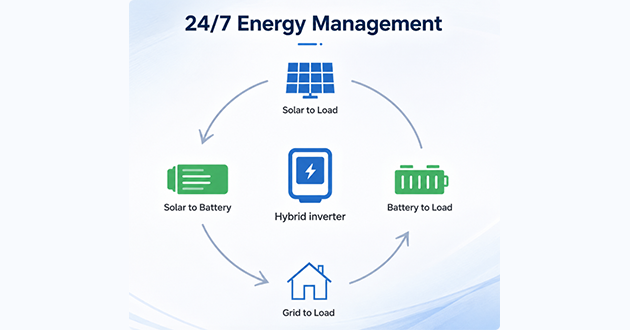
A hybrid inverter enables a solar battery system to operate more flexibly by managing power flow between solar panels, batteries, the grid, and connected loads. Unlike traditional solar inverters that mainly convert PV power into usable electricity, hybrid inverters can decide how energy should be used based on real-time demand and available power sources.
A typical energy flow may include:
Solar → Load
Solar → Battery
Solar → Grid
Battery → Load
Grid → Load
This allows the system to use solar energy more efficiently during the day, store excess power for later use, and maintain backup capability when needed.
1.Maximizing Solar Energy Utilization
During periods of high solar production, the priority is usually to use PV energy directly for connected loads. When generation exceeds consumption, the remaining energy can be stored in batteries instead of being wasted.
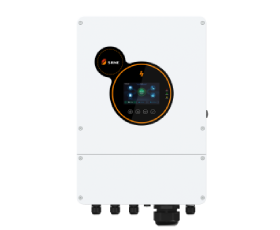
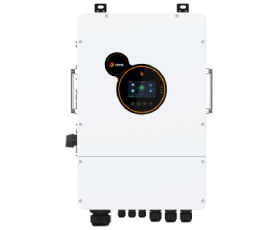
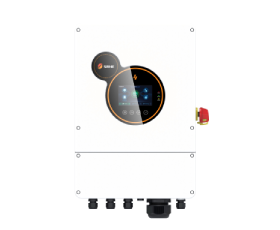
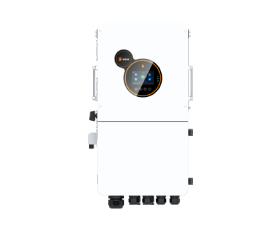
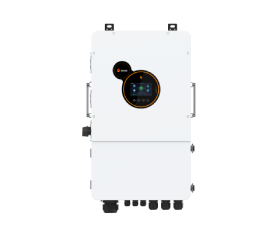
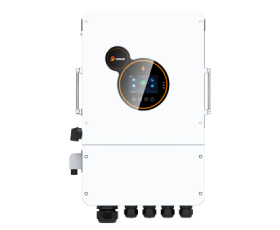
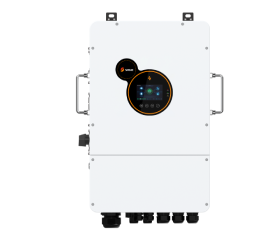
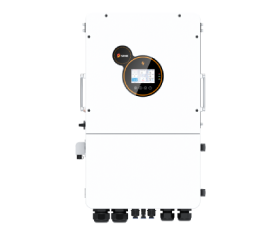
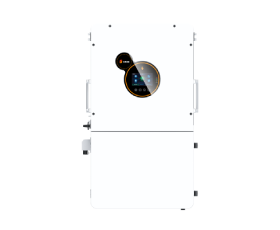
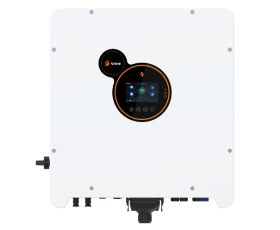
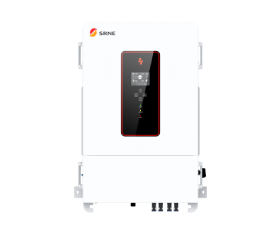
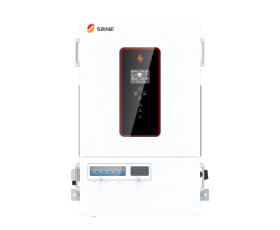
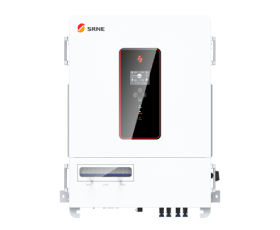
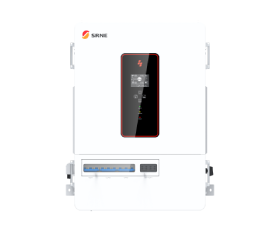
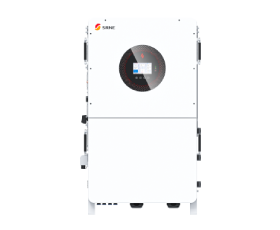
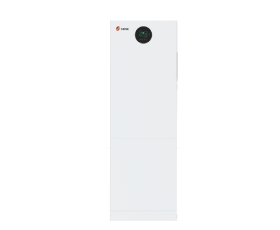
To improve solar harvesting, hybrid inverters commonly use MPPT technology to continuously track the optimal operating point of PV input. For example, SRNE HESP series hybrid inverters adopt multiple MPPT channels, allowing the system to handle different PV configurations and improve energy collection under changing sunlight conditions.
2.Coordinating Battery Storage and Power Demand
The battery is what gives a hybrid inverter system the ability to shift energy usage over time. Solar power generated during the day can be stored and released when electricity demand increases or solar production decreases.
Through battery communication, charging control, and operating mode settings, the inverter can manage when energy is stored and when it is supplied to loads. This helps maintain a more balanced relationship between solar generation, battery availability, and power consumption.
3.Maintaining Backup Power Availability
For areas with unstable grid supply, backup capability is one of the main reasons users choose hybrid inverter systems. When grid power is interrupted, the inverter can switch to available energy sources, such as stored battery power, to continue supplying selected loads.
HESP hybrid inverters support backup operation modes designed for residential and energy storage applications, helping users maintain essential power availability during outages.
4.Intelligent Energy Scheduling with Multiple Power Sources
A 24/7 energy system does not rely on one power source working continuously. Instead, it depends on how effectively the inverter manages different energy inputs.
By considering factors such as solar production, battery status, electricity demand, and grid conditions, hybrid inverters can adjust energy priorities according to different application needs. This makes them suitable for systems aiming to increase self-consumption, reduce grid dependence, or improve backup reliability.
5.A Complete System Design Is Essential for 24/7 Operation
A hybrid inverter is an important part of continuous energy management, but it cannot determine system runtime by itself. Long-term operation depends on the combined design of inverter capacity, battery storage, solar generation, and load requirements.
With the right configuration, a solar battery system can achieve more efficient energy usage and provide stable power support across different operating conditions.
How to Make an Inverter Run Reliably 24/7?
Reliable 24/7 inverter operation depends on proper selection, installation, and basic maintenance. A few simple practices can help reduce unnecessary interruptions and keep the system performing consistently.
1.Select a Suitable Inverter Capacity
Choose an inverter based on actual power demand and expected future requirements. Proper sizing helps avoid operating conditions that may affect efficiency and system stability.
2.Keep the Installation Environment Suitable
Install the inverter in a location with sufficient airflow and appropriate protection from heat, dust, or moisture. A suitable environment supports stable performance during continuous operation.
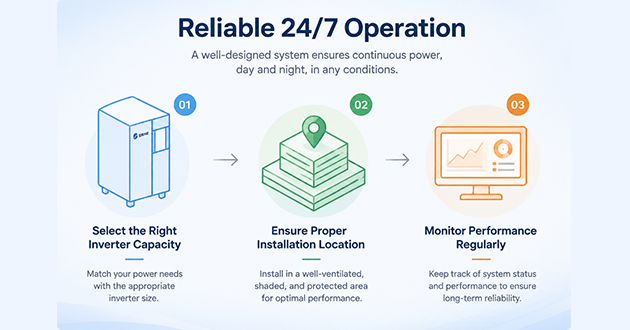
3.Monitor System Status Regularly
Regularly checking energy output, battery status, and fault records helps identify unusual changes early. For hybrid inverter systems, monitoring PV generation and battery behavior also supports more efficient energy management.
FAQs
1.Can you overload a solar inverter?
Yes, a solar inverter can be overloaded if the connected load exceeds its rated output capacity. When this happens, the inverter may reduce power output, trigger overload protection, or temporarily shut down to protect internal components.
To avoid overload issues, the inverter size should match the actual power demand, including both normal operating loads and equipment with higher startup power requirements.
2.How long can an inverter run continuously?
An inverter can run continuously for 24 hours or longer when it operates within its rated capacity and the overall system is properly configured. The actual runtime depends on factors such as load demand, battery capacity, solar availability, and installation conditions.
For hybrid inverter systems, continuous operation relies on the coordination between the inverter, solar generation, battery storage, and energy management settings.
3.Should I turn off my inverter when not in use?
In most solar energy systems, it is not necessary to turn off the inverter frequently during normal operation. Modern inverters are designed to manage standby modes and adjust operation based on power availability.
However, the inverter may be turned off during long periods of system inactivity, maintenance, or when recommended by the manufacturer. Before shutting down, users should follow the correct power-off sequence to protect connected equipment.
4.Do solar inverters go offline at night?
Yes, many solar inverters enter standby or low-power modes at night because there is no solar energy available for conversion. This does not necessarily indicate a fault or system failure.
For hybrid inverter systems with battery storage, the inverter can continue operating at night by managing stored battery energy, backup loads, or grid interaction depending on the system configuration.
5.What happens if an inverter is not used for a long time?
When an inverter remains unused for an extended period, factors such as battery condition, environmental exposure, and system settings may affect future operation. Long-term storage without proper maintenance can lead to battery discharge, communication issues, or reduced system readiness.
Before restarting an unused inverter, users should check power connections, battery status, environmental conditions, and system settings to ensure safe operation.
Conclusion
Hybrid inverters provide greater flexibility by managing multiple energy sources, optimizing solar usage, and supporting backup power when needed. With the right system configuration, regular monitoring, and proper maintenance, users can achieve more efficient energy management and a more reliable solar power solution.
