







































How Do I Know If My Hybrid Inverter Is Bad?
This article is a practical guide to help you identify common hybrid inverter failure signs, understand protection functions, troubleshoot potential issues, and determine when repair or replacement may be needed.
Why Is a Hybrid Inverter Important in a Solar Energy System?
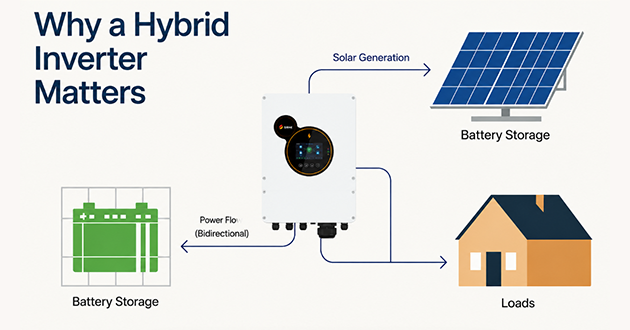
A hybrid inverter serves as the connection point between solar generation, battery storage, the grid, and electrical loads. Beyond power conversion, it helps manage energy flow by deciding when solar energy is used directly, stored in batteries, or supplied as backup power.
Since multiple parts of a solar storage system rely on its operation, inverter performance plays an important role in maintaining stable power supply and efficient energy use. Having a clear understanding of how a hybrid inverter works can also make it easier to identify potential issues when system performance changes.
Common Signs That Your Hybrid Inverter May Be Failing
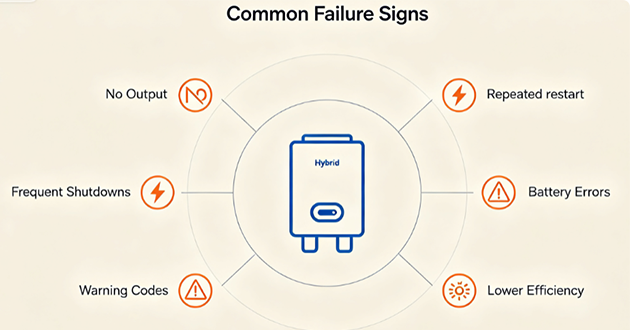
Hybrid inverter problems often develop gradually rather than appearing as a sudden failure. Changes in power output, system stability, or battery performance can indicate that the inverter requires attention. Identifying these early signs helps reduce downtime and maintain reliable solar energy operation.
1. The Inverter Does Not Turn On or Has No Output Power
A hybrid inverter that cannot start or stops supplying AC power is one of the most noticeable signs of a potential issue. Typical symptoms include no display response, unavailable backup power, or a complete interruption of energy output.
Start by checking the battery status, DC and AC connections, and whether the inverter has entered a protection mode. If the problem continues after basic checks, the inverter may require further diagnosis.
2. Frequent Shutdowns or Unexpected Restarting
Repeated shutdowns or restarts usually occur when the inverter detects conditions outside normal operating limits. Common situations include excessive load, high operating temperature, unstable grid input, or abnormal battery conditions.
Reducing unnecessary loads, improving ventilation, and reviewing system settings can help prevent repeated protection events. However, frequent interruptions may indicate that the system configuration or operating conditions need adjustment.
3. Battery Charging or Discharging Problems
Since hybrid inverters manage energy between solar panels, batteries, and electrical loads, battery-related abnormalities are a common warning sign. Users may experience slow charging, unexpected battery depletion, or unstable switching between different operating modes.
Checking battery compatibility, communication status, and charging parameters can help restore proper energy management. For lithium battery systems, reliable communication with the BMS is essential for stable operation.
4. Error Codes or Warning Messages Keep Appearing
Fault codes and warning indicators are designed to alert users when the inverter detects abnormal conditions. Repeated alarms may be related to voltage variations, overheating, communication failures, or incorrect system settings.
Recording the error code and the conditions when it appears can make troubleshooting more efficient. This information also helps technical teams identify the issue faster when support is required.
5. Reduced Solar Power Output or Lower Efficiency
A drop in solar output or overall system efficiency may indicate that the inverter is not performing as expected. Signs can include lower PV generation, slower battery charging, or reduced energy availability during normal operation.
Before identifying the inverter as the cause, check the solar input, panel condition, and system configuration. If the PV system is operating normally but performance remains reduced, further inverter inspection may be needed.
How to Tell If the Problem Comes From the Hybrid Inverter or Other Components?
Symptom | Possible Causes | What to Check First |
No power output | Low battery voltage, AC connection issue, inverter protection or internal fault | Battery status, DC/AC connections, inverter display |
Battery not charging or discharging properly | Incorrect battery settings, BMS communication issue, battery fault, inverter charging configuration | Battery compatibility, communication status, charging parameters |
Low solar production | PV input problem, shading, incorrect PV configuration, MPPT performance issue | Solar panel output, PV voltage/current, MPPT status |
Frequent shutdown or restart | Overload, overheating, unstable grid input, battery protection | Load demand, installation temperature, grid and battery condition |
Repeated error alarms | System configuration issue, communication failure, voltage abnormality, hardware fault | Error code, operating conditions, connected devices |
Understanding Hybrid Inverter Error Codes and Protection Functions
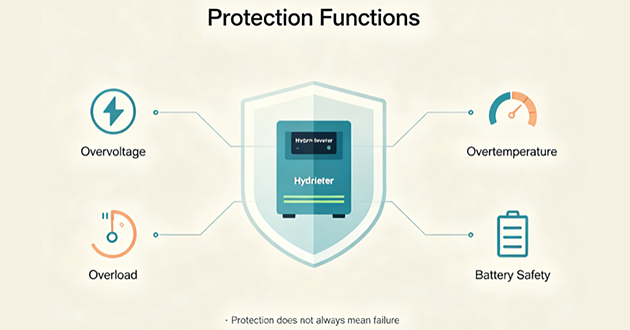
Hybrid inverters are equipped with intelligent protection functions to maintain safe operation when abnormal conditions occur. Instead of continuing to operate under unsafe conditions, the inverter may limit output, enter a protective state, or display an error message to protect the entire solar energy system.
It is important to understand that a warning or shutdown does not necessarily mean the inverter has failed. In many situations, the protection system is working as designed to prevent potential damage caused by external conditions or incorrect system operation.
1.Overvoltage Protection
Overvoltage protection is triggered when the voltage from the PV input, battery, or grid exceeds the inverter’s allowable operating range. Without proper protection, excessive voltage fluctuations could affect connected devices and internal components.
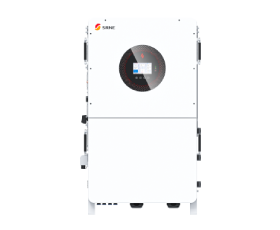
Hybrid inverters such as SRNE models continuously monitor voltage conditions and respond quickly when abnormal levels are detected, helping maintain stable operation across different energy sources.
2.Overtemperature Protection
During energy conversion, hybrid inverters naturally generate heat, especially when operating with high power output for extended periods. If the internal temperature becomes too high, the inverter may reduce output or temporarily stop working to protect critical components.
Maintaining sufficient ventilation and installing the inverter in a suitable environment are important for long-term reliability. Temperature monitoring and thermal protection features help SRNE inverter systems adapt to different installation conditions.
3.Overload Protection
When the connected load exceeds the inverter’s rated capacity, the system may activate overload protection to prevent excessive stress on internal circuits.
This situation can occur when additional appliances are connected or when the actual power demand is higher than expected. Choosing an inverter based on real load requirements and future expansion needs can help maintain stable operation.
4.Battery Protection
Battery management is a key part of hybrid inverter operation, especially in systems using lithium batteries. If abnormal battery voltage, communication interruptions, or BMS protection signals occur, the inverter may adjust charging or discharging behavior to protect the battery system.
SRNE hybrid inverters are designed to work with compatible battery systems and support coordinated communication between the inverter and BMS, helping improve energy management efficiency and system safety.
5.Protection Activation Does Not Always Mean Inverter Failure
Many users assume that an error code or temporary shutdown means the inverter needs to be replaced. However, protection mechanisms are designed to prevent damage and keep the system operating safely under abnormal conditions.
Before deciding on repair or replacement, users should review the fault information, operating environment, and related system components. In some cases, the issue may come from battery conditions, load requirements, or installation factors rather than the inverter itself.
When Should You Repair or Replace a Hybrid Inverter?
A hybrid inverter does not always need to be replaced when problems occur. Issues related to system settings, wiring, installation conditions, or software configuration can often be resolved through adjustment, maintenance, or professional support. If the inverter can return to normal operation after addressing these factors, repair is usually the more practical choice.
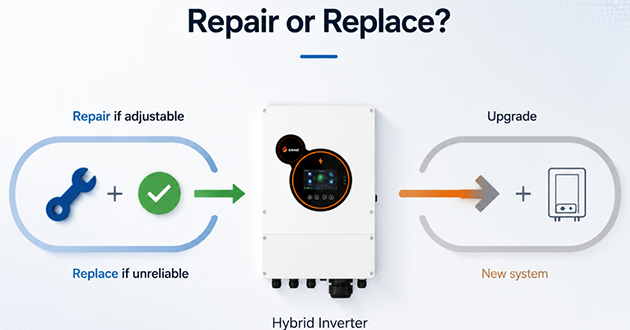
However, replacement may become necessary when the inverter has suffered internal component damage, continues to experience hardware-related failures, or cannot maintain consistent power output. When repair costs approach the price of a new unit or the existing inverter no longer matches the needs of the energy system, upgrading can provide better long-term reliability.
How to Prevent Hybrid Inverter Problems in the Future?
Proper operation and regular maintenance can help extend the service life of a hybrid inverter and reduce unexpected system interruptions. By focusing on system sizing, installation conditions, monitoring, and configuration management, users can maintain more stable solar and energy storage performance.
1.Choose the Right Inverter Size
Selecting an inverter that matches the actual power demand is essential for long-term reliability. A system that is consistently overloaded may experience reduced efficiency, frequent protection events, and increased component stress. Proper capacity planning ensures the inverter can handle current loads while leaving room for future expansion.
2.Install the Inverter in a Suitable Environment
The installation location directly affects inverter performance and durability. Adequate airflow, proper temperature control, and protection from dust or moisture help prevent unnecessary thermal stress and improve operational stability.
3.Monitor System Performance Regularly
Regular monitoring helps identify abnormal changes before they develop into major problems. Checking energy production, battery status, and fault records allows users to better understand system performance and respond quickly when unusual conditions appear.
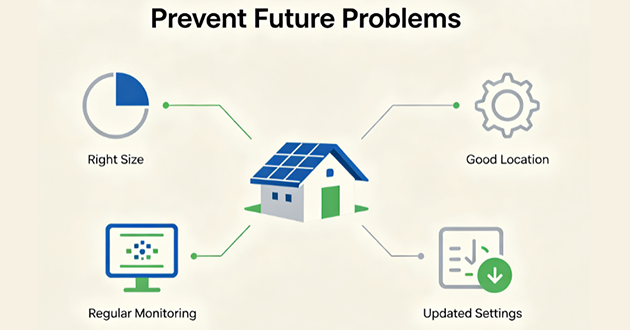
4.Keep Firmware and Settings Updated
Updated firmware and correct system parameters help maintain compatibility between the inverter, battery, and energy management system. Keeping settings properly configured can improve system coordination and support more reliable long-term operation.
FAQs
1.How do I reset my hybrid inverter?
A hybrid inverter can usually be reset by turning off the connected loads, disconnecting the power sources, waiting for a short period, and restarting the system according to the manufacturer’s instructions. The exact reset process may vary depending on the inverter model and system configuration.
Before resetting, users should check whether the shutdown was caused by an error code, overload, battery issue, or protection event. Frequent resets without identifying the cause may not solve the underlying problem.
2.What are the signs of a bad inverter?
Common signs of a failing hybrid inverter include no power output, frequent shutdowns, repeated error alarms, abnormal battery charging or discharging, and reduced solar conversion performance.
However, these symptoms do not always mean the inverter itself is damaged. Issues with batteries, PV input, system settings, or installation conditions can also cause similar problems. Proper troubleshooting is needed to identify the actual cause.
3.Can a hybrid inverter be repaired?
Yes, many hybrid inverter issues can be repaired if the problem is related to settings, connections, firmware, or external system conditions. For example, configuration adjustments, communication checks, or replacing certain components may restore normal operation.
Replacement may be required when the inverter has severe internal damage, repeated hardware failures, or can no longer provide stable power output. The decision usually depends on the inverter’s condition, repair cost, and expected service life.
4.How to troubleshoot a hybrid inverter?
To troubleshoot a hybrid inverter, start by checking the basic operating conditions, including battery status, PV input, AC connection, system settings, and displayed error codes.
Common troubleshooting steps include:
Checking battery voltage and communication status;
Verifying PV input and solar production conditions;
Reviewing inverter settings and operating modes;
Checking load demand and possible overload conditions;
Recording fault codes for further diagnosis.
If the problem continues after basic checks, professional technical support may be needed to determine whether the issue comes from the inverter or another part of the energy storage system.
Conclusion
Before replacing a hybrid inverter, users should evaluate the overall system condition, including battery, PV input, settings, and operating environment. With proper installation, regular monitoring, and a reliable inverter solution, solar energy systems can achieve more stable and efficient long-term operation.
