







































Top Solar Inverter Options for 2026
Choosing the right solar inverter in 2026 requires more than comparing peak efficiency figures. The best option depends on whether the project needs battery storage, whole-home backup, panel-level optimization, easy future expansion or compatibility with a particular grid standard.
This guide compares eight leading solar inverter options for 2026, focusing on their system architecture, practical applications and key considerations to help you understand which type of inverter may better match different residential energy needs.
Quick Comparison of the Top Solar Inverter Options for 2026
Inverter series | System architecture | Battery integration | Best suited for | Main consideration |
Fronius GEN24 Plus | Hybrid string inverter | Yes | Premium residential solar and storage systems | Availability and supported batteries vary by market |
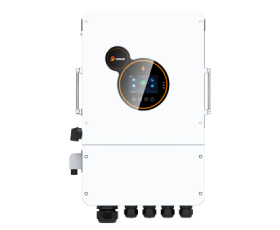
Sungrow SH-RS Series | Hybrid string inverter | Yes | Balanced solar, storage and backup projects | Model range and backup configuration differ by region |
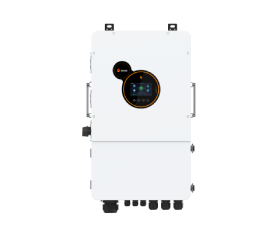
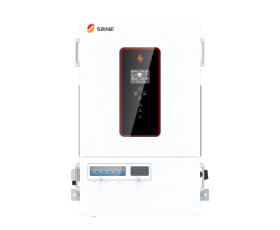
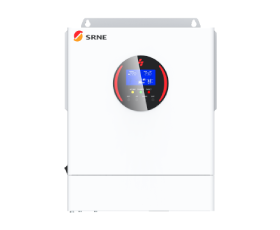
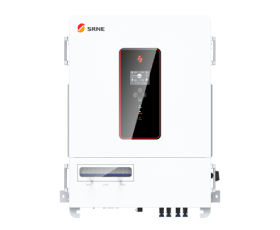
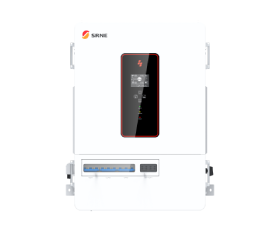
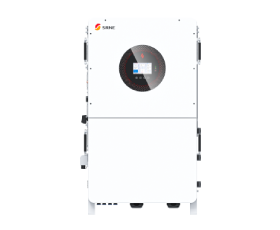
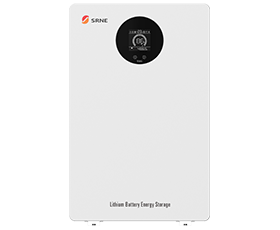
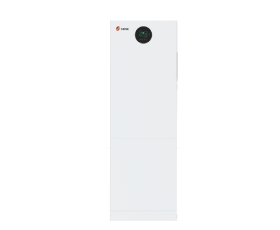
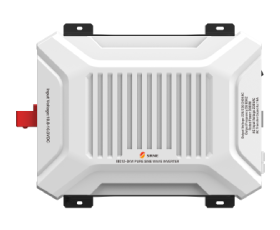
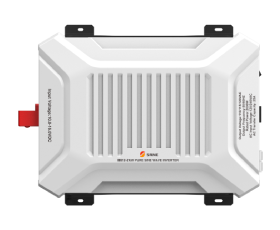
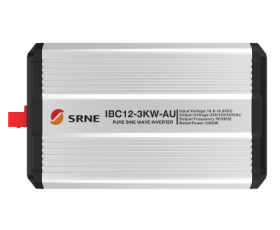
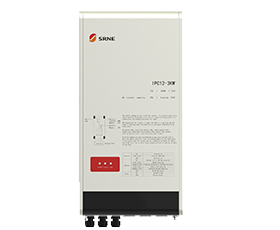
SRNE HESP Series | Hybrid inverter | Yes | Flexible residential storage and backup applications | Exact functions depend on the selected regional model |
SMA Sunny Boy Smart Energy | Hybrid string inverter | Yes | Integrated home energy management | Verify local battery and backup compatibility |
Huawei SUN2000-L1 Series | Hybrid-ready string inverter | Yes | Smart residential systems using a connected product ecosystem | Backup and optimizer functions may require additional equipment |
GoodWe ES G2 Series | Hybrid inverter | Yes | Value-focused residential storage systems | Local support and certification should be checked |
SolarEdge Home Hub Inverter | String inverter with power optimizers | Yes | Complex roofs and panel-level control | Requires compatible module-level equipment |
Enphase IQ8 Series | Microinverter system | Through compatible AC-coupled storage | Shaded roofs, multiple orientations and phased expansion | Higher equipment count and potentially higher initial cost |
1. Fronius GEN24 Plus: A Premium Hybrid Option
The Fronius GEN24 Plus is a hybrid inverter designed to coordinate solar generation, battery storage and backup power within one residential energy system. Rather than competing on a single specification, it combines energy conversion, system monitoring and controllable energy flows to help households use more of their locally generated solar power.
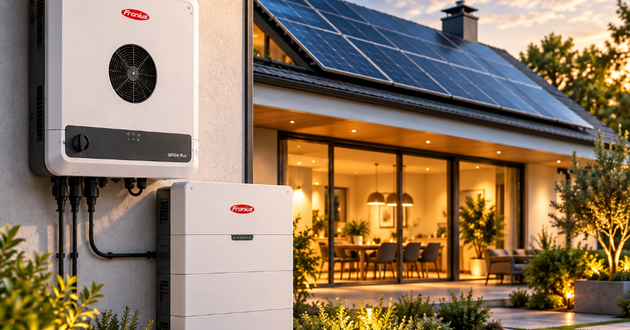
In daily operation, the Fronius GEN24 Plus can direct available PV energy to household loads, use surplus generation to charge a compatible battery and draw stored electricity when solar production is insufficient. Depending on the exact model, regional configuration and additional equipment, the system can also provide backup power during grid outages. This makes it important to calculate essential loads and confirm the required backup configuration before installation.
The platform can work with compatible batteries, smart meters and energy-management equipment to provide a clearer view of solar production, household consumption and storage status. It may also form part of a wider home energy setup involving EV charging or controllable electrical loads. However, battery compatibility, backup functions and available accessories differ between markets, so installers should verify the regional data sheet and approved compatibility list rather than relying only on the series name.
In a residential solar-plus-storage project, this inverter is most useful when the homeowner wants solar energy to cover daytime consumption, charge a battery with surplus power and support selected household circuits during an outage. It is particularly suitable for homes planning to coordinate PV generation, battery storage, consumption monitoring and future EV charging through one connected energy platform, provided that the selected battery and backup hardware are available in the local market.
2. Sungrow SH-RS Series: A Balanced Solar-Storage Choice
The Sungrow SH-RS Series is a single-phase residential hybrid inverter range covering the SH3.0RS through SH6.0RS models, with rated outputs from 3 kW to 6 kW. It combines PV conversion, high-voltage battery control and backup operation within one platform, making it suitable for households seeking higher solar self-consumption and lower dependence on grid electricity.
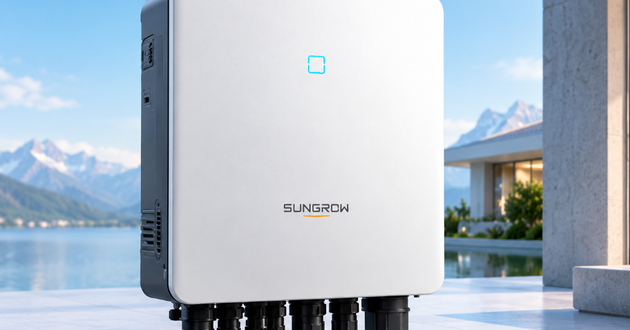
During operation, the Sungrow SH-RS Series prioritizes available solar power for household loads before directing surplus generation to a compatible battery. Its two independent MPPTs operate across a 40–560 V range, allowing the system designer to separate two PV strings when the roof has different orientations or operating conditions. The 80–460 V battery range also gives installers flexibility when selecting a compatible high-voltage storage configuration.
System performance can be viewed through iSolarCloud, including PV production, battery status, household consumption and grid exchange. For outage protection, the series offers a backup transfer time of less than 10 ms when correctly configured, allowing designated essential circuits to continue operating with minimal interruption.
In a typical home, the inverter can supply daytime appliances directly from the PV array, store excess generation and release it during evening peak periods. It is particularly useful where the roof requires two independently managed PV strings and the homeowner wants a high-voltage battery to support lighting, refrigeration, networking equipment or other essential loads during short outages. The final model should still be selected according to the calculated household demand, PV array size, battery compatibility and local grid requirements.
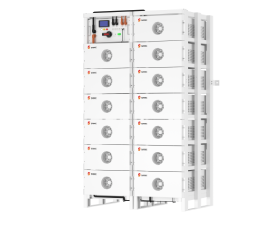
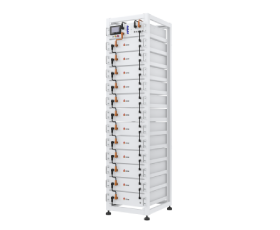
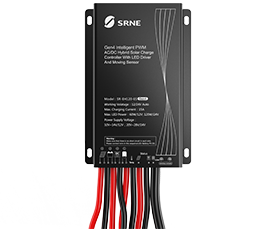
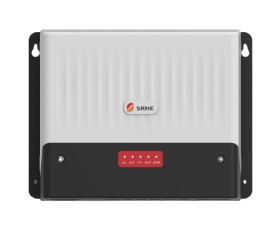
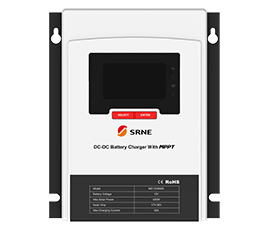
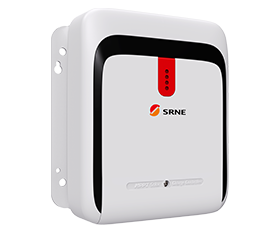
3. SRNE HESP Series: Flexible Hybrid and Backup Applications
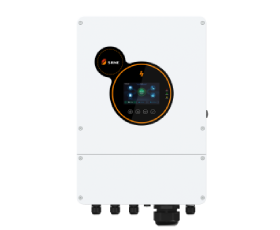
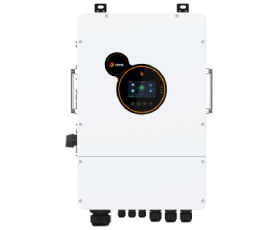
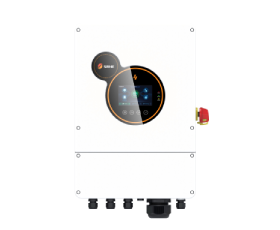
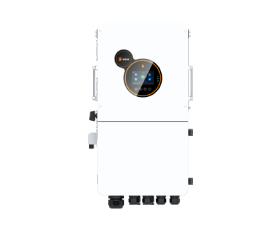
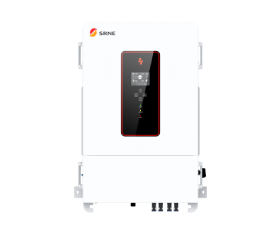
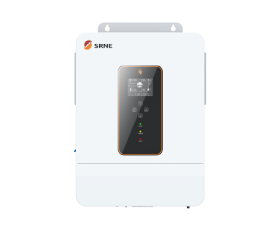
Rather than relying on a single configuration for every market, the SRNE HESP Series spans single-phase, split-phase and three-phase hybrid inverters with both low- and high-voltage battery options. This gives installers more room to work around differences in household demand, regional grid formats and storage architecture.
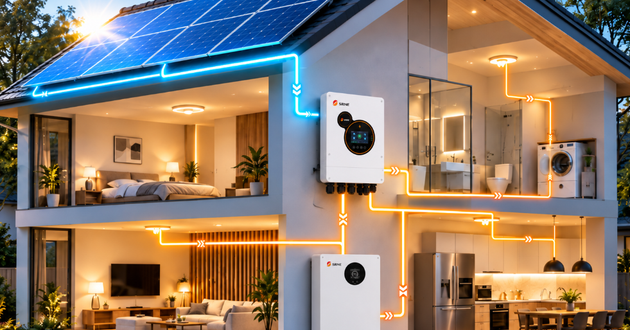
Within the European single-phase range, the 4, 4.6 and 6 kW models use 40–60 V battery systems and provide two independent MPPTs operating across 120–450 V. The two trackers are useful when an array is divided between roof sections with different orientations, while support for up to six parallel units creates scope to increase system output without replacing the original inverter.
Backup performance is another practical consideration. A typical transfer time of 10 ms can help designated circuits remain operational during a grid interruption, and peak output of up to twice the rated power provides additional capacity for short startup surges from refrigerators, pumps and similar loads. With AC-coupling capability and a dedicated generator input, these models may also suit certain storage upgrades where an existing solar installation needs backup support.
This breadth is useful, but it also means “HESP” should not be treated as one uniform specification. A distributor supplying different regions may value the available phase and voltage choices, while an individual homeowner still needs a model selected against the local grid connection, PV string design, battery voltage and expected backup demand.
4. SMA Sunny Boy Smart Energy: Integrated Home Energy Management
Homes with several roof orientations can be difficult to serve efficiently with a conventional two-tracker design. The SMA Sunny Boy Smart Energy addresses this with three independent MPP trackers across its standard 3.6, 4, 5 and 6 kVA single-phase models. Panels facing east, west and south can therefore be assigned to separate inputs instead of forcing dissimilar roof sections into the same operating group.
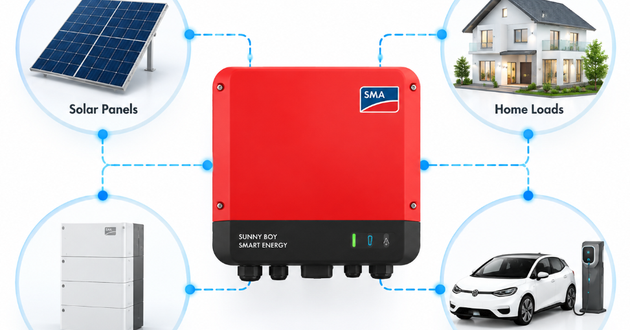
Solar conversion and high-voltage battery control are integrated into the same unit, but storage does not have to be installed immediately. The inverter can begin as a PV-only system and accept a compatible battery later, giving homeowners some flexibility when the initial budget does not cover a complete solar-plus-storage installation. Individual PV strings can also be monitored through Sunny Portal, helping installers distinguish a string-level issue from a wider system fault.
Backup can be configured at different levels. The integrated Secure Power Supply is intended for selected loads, whereas the optional SMA Backup solution supports a broader household backup arrangement. These functions share the same output and should therefore be planned as alternative configurations rather than combined features.
Its strongest application is a home where the inverter is expected to coordinate more than panels and a battery. When connected through Sunny Home Manager 2.0, the system can incorporate an SMA EV Charger or a compatible heat pump, directing available solar energy toward storage, mobility or heating according to household demand. This makes it a particularly relevant choice for homeowners planning a connected energy system instead of a standalone PV installation.
5. Huawei SUN2000-L1 Series: Smart Energy Integration
The appeal of the Huawei SUN2000-L1 Series lies in its modularity. A project can start with a single-phase string inverter and later incorporate compatible storage, consumption monitoring, backup equipment or module-level optimization according to the needs of the property.
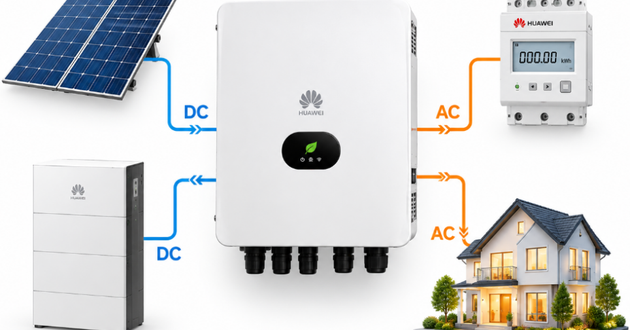
The series covers rated outputs from 2 to 6 kW and provides two MPP trackers with a 90–560 V operating range. On a home with two roof sections, each string can be controlled independently, which may be sufficient when both sections receive relatively consistent sunlight. If partial shading or uneven module conditions affect only part of the array, compatible Huawei optimizers can be added where needed instead of being treated as mandatory equipment on every panel.
Battery integration extends the system beyond daytime solar use. The inverter supports Huawei Smart ESS configurations from 5 to 30 kWh, allowing surplus generation to be stored for evening consumption. Maximum inverter efficiency reaches 98.4% on models from 3.68 kW upward, while FusionSolar brings PV output, battery operation and household energy flow into the same monitoring environment.
For a typical residence, the inverter might manage two differently oriented strings during the day, charge the battery after household demand has been met and discharge stored energy after sunset. Outage supply requires the appropriate Huawei Backup Box, so backup should not be described as an automatic inverter feature. The same distinction applies to module optimization and consumption measurement: they expand the system when installed, but they are not all included in the inverter itself.
6. GoodWe ES G2 Series: Practical Low-Voltage Battery Integration
The GoodWe ES G2 Series is particularly relevant for residential storage projects built around low-voltage batteries. Covering single-phase outputs from 3 to 6 kW, the range works with 40–60 V battery systems and includes models offering continuous charging and discharging currents of up to 120 A. This can be useful where the system must move a meaningful amount of energy between the battery and household loads without adopting a high-voltage storage architecture.
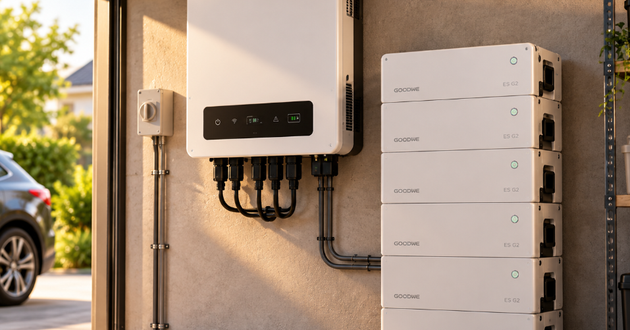
Two MPPTs allow the PV array to be divided between separate roof sections, while a maximum input current of 16 A per tracker improves compatibility with modern high-current modules. These characteristics make the range suitable for straightforward residential roofs as well as installations where panels face different directions.
The backup side is designed for more than maintaining a few low-power electronics. When properly sized, the inverter can support heavier household loads such as air conditioners, and its transfer to backup mode takes less than 10 ms. Dry-contact control can also be used to manage selected equipment according to system conditions, rather than allowing every appliance to operate without priority during an outage.
For a household using solar throughout the day, the inverter can direct excess production into a compatible battery and discharge it when grid electricity becomes more expensive or solar output falls. If the grid fails, the same installation can maintain the circuits assigned to the backup panel. The selected ES G2 model should therefore reflect not only total household consumption but also battery current limits and the combined startup demand of the appliances expected to operate off-grid.
7. SolarEdge Home Hub Inverter: A DC-Coupled Energy Ecosystem
The SolarEdge Home Hub Inverter is best understood as the control center of a wider SolarEdge Home installation. It works with module-level power optimizers and can bring PV generation, battery storage, backup equipment and smart energy devices into the same system rather than managing solar conversion as an isolated function.
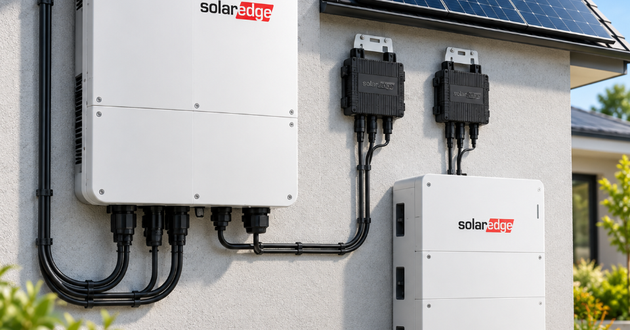
One advantage of this architecture is the direct DC connection between the array, inverter and SolarEdge Home Battery. Surplus solar energy can be transferred into storage without first being converted to AC and then back to DC. SolarEdge also allows PV capacity to be oversized by up to 200% relative to the inverter rating and supports as many as three SolarEdge Home Batteries on one inverter, although the appropriate array and storage ratio still depends on local design rules and the property’s consumption profile.
Module-level optimization makes this option relevant for roofs affected by partial shading, multiple orientations or irregular layouts. Performance can be viewed at panel level, which helps installers locate a poorly performing module without treating the entire string as the source of the problem. The same design also means that SolarEdge power optimizers are an integral part of the system architecture rather than an optional addition used only on shaded modules.
In a home with daytime solar production, evening EV charging and a large storage requirement, the inverter can coordinate energy across these different uses through a single platform. Full- or partial-home outage protection can be added with the SolarEdge Home Battery and Backup Interface. This configuration can offer extensive system control, but buyers should account for its ecosystem dependency: inverter, optimizers, battery and backup hardware need to be planned together.
8. Enphase IQ8 Series: Panel-Level Conversion and Expansion
Unlike the string and hybrid models elsewhere in this comparison, the Enphase IQ8 Series places a microinverter behind each solar panel. Every module converts its own DC output into AC, so the performance of one panel does not establish the operating point for the entire string. This is especially valuable on roofs where chimneys, trees or different pitches create uneven conditions across the array.
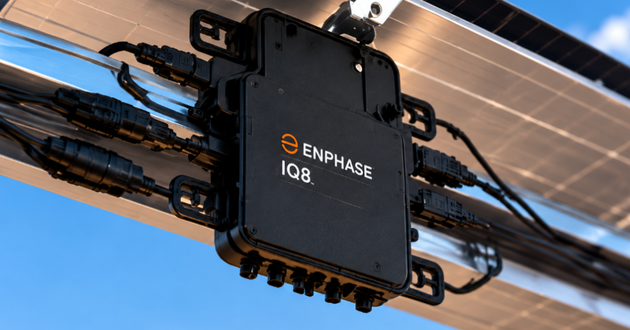
The series includes several output classes for different module characteristics. In the North American range, for example, the IQ8+ provides up to 290 VA of peak output, while higher-output versions such as the IQ8HC reach 384 VA. Selecting the largest microinverter is not automatically the best approach: the inverter’s output rating and MPPT voltage window must be matched to the electrical characteristics of the chosen solar module.
A panel-level system can also be expanded in smaller increments. If roof space and the electrical design allow, additional modules and microinverters can be added without replacing a central inverter to accommodate a larger string. Individual production data is available through the Enphase monitoring environment, helping users and installers identify whether reduced output comes from one module or affects the whole installation.
For a complex residential roof, IQ8 microinverters allow each panel section to operate independently and reduce the impact of localized shading or orientation differences. The platform can be combined with an IQ Battery and the required Enphase control equipment for stored-energy backup. Certain IQ8 configurations can also support sunlight-based power during an outage, but this requires the appropriate IQ System Controller and load-management design; it should not be described as a capability of the microinverters alone.
Conclusion
There is no single solar inverter that fits every residential project. The right choice depends on the system design, including PV capacity, battery requirements, backup expectations, roof layout and local regulations.
Whether the priority is flexible energy storage, panel-level optimization, smart home integration or future system expansion, selecting an inverter based on actual application requirements can help create a more reliable and efficient solar energy system.
