







































What Are the Common Problems with 3 Phase Inverters?
This article explains the most common problems with 3 phase inverters, including voltage faults, overheating, communication failures, phase imbalance, and low power output, helping users better understand possible causes and troubleshooting methods.
What Are the Most Common Problems with 3 Phase Inverters?
Problem | Possible Cause | Common Symptoms |
Overvoltage fault | Grid voltage fluctuation | Inverter shutdown |
Overheating | Poor ventilation / overload | Reduced output |
Communication failure | Network or wiring issue | Monitoring offline |
Phase imbalance | Uneven load distribution | Abnormal output |
Startup failure | Incorrect configuration | Cannot operate |
Low output power | PV or system issues | Reduced generation |
Overvoltage and Undervoltage Faults in 3 Phase Inverters
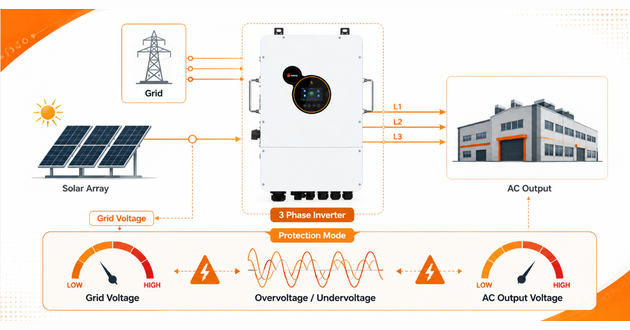
Voltage instability is one of the common issues affecting three phase inverters, especially in solar and energy storage systems connected to the grid. When AC voltage exceeds or falls below the allowable range, the inverter may activate protection and temporarily stop operation to protect the system.
1.Why Do Three Phase Inverters Experience Voltage Faults?
Overvoltage and undervoltage problems are often caused by unstable grid conditions, incorrect parameter settings, or installation-related issues. In areas with weak grid infrastructure, voltage fluctuations can cause a 3 phase solar inverter to enter protection mode during periods of high demand or high solar generation.
Loose connections, unsuitable cable specifications, and incorrect grid settings may also affect voltage stability. For 3 phase hybrid inverter systems, battery charging conditions and energy management settings should also be considered, as they can influence overall system performance.
2.Common Symptoms and Solutions
Typical signs of voltage faults include error codes, unexpected shutdowns, unstable output, or repeated restart cycles. In solar applications, frequent protection events may reduce energy production because the inverter spends more time in standby mode.
To troubleshoot the issue, check the AC voltage at the inverter connection point and verify that grid parameters match local requirements. If the settings are correct, inspect the wiring, terminals, and cable selection. For areas with unstable utility power, improving grid conditions or consulting the power provider may help reduce recurring voltage problems.
Overheating Problems in 3 Phase Inverters
High operating temperatures are a common challenge for three phase inverters, especially in commercial solar and energy storage projects where the equipment often handles higher power levels. Heat is generated naturally during DC-to-AC conversion, but problems occur when the inverter cannot release that heat effectively during continuous operation.
The installation environment plays an important role in temperature control. An inverter installed in a narrow space, exposed to direct sunlight, or surrounded by other heat-generating equipment may run hotter than expected. In addition, dust accumulation on cooling fans or ventilation areas can gradually reduce heat dissipation performance and increase thermal stress on internal components.
Load conditions are another factor that should not be overlooked. A 3 phase solar inverter that frequently operates near its rated output will experience higher internal temperatures, particularly during periods of peak energy generation. In 3 phase hybrid inverter systems, repeated battery charging and discharging can also increase the workload, making proper system design and installation even more important.
Overheating is usually noticed through temperature alarms, reduced power output, abnormal fan operation, or unexpected shutdowns during high-demand periods. Maintaining sufficient installation space, keeping cooling areas clean, and selecting an inverter capacity that matches the actual application can help reduce temperature-related problems.
Communication Failures in 3 Phase Inverters
Communication issues may occur in three phase inverters that rely on monitoring platforms or external devices for system management. Unlike hardware faults, these problems do not always stop the inverter from working. Instead, users may notice that the monitoring system is offline, data updates are delayed, or some operating information is missing.
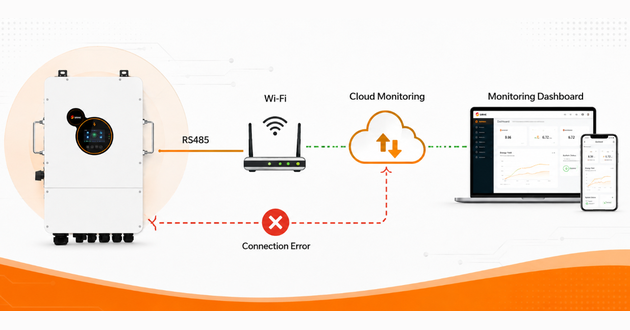
In most cases, the cause is related to the communication path between devices. Unstable network connections, incorrect settings, WiFi signal limitations, or wiring issues with interfaces such as RS485 can prevent data from being transmitted properly.
Because the inverter needs to interact with batteries, BMS, and energy management systems. A communication interruption may affect the visibility of battery status, charging information, and overall system monitoring.
Troubleshooting usually starts with checking network conditions, communication wiring, and device settings. Ensuring that the inverter, battery system, and monitoring platform are correctly connected and configured can help locate the source of the problem and restore normal data transmission.
Phase Imbalance Problems in Three Phase Inverters
Uneven phase conditions can affect the operation of three phase inverters, particularly in commercial and industrial systems where multiple loads are connected. Since three-phase systems distribute power across L1, L2, and L3, large differences in current or voltage between phases may affect the way the inverter manages power output.
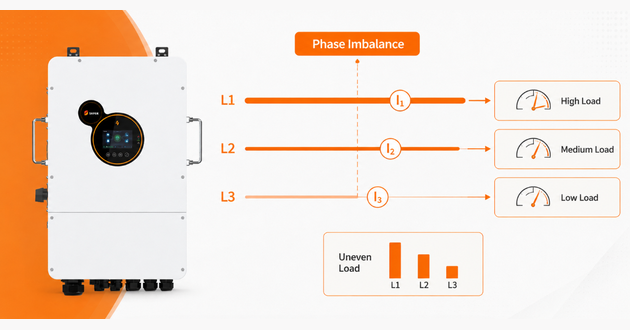
This problem usually appears when electrical loads are not evenly distributed. For example, some equipment may place a much higher demand on one phase than the others. Incorrect wiring during installation or variations in the utility grid can also create an imbalance between phases.
Identifying this problem typically requires comparing the voltage and current readings of each phase. If an imbalance is found, adjusting the connected loads or correcting wiring arrangements can help bring the system back to normal operation.
Low Power Output from a 3 Phase Solar Inverter
When a 3 phase solar inverter produces less power than expected, the cause is often related to the energy input side or system configuration rather than the inverter itself. Even when the inverter is operating normally, limitations in solar generation or mismatched system parameters can affect the final output.
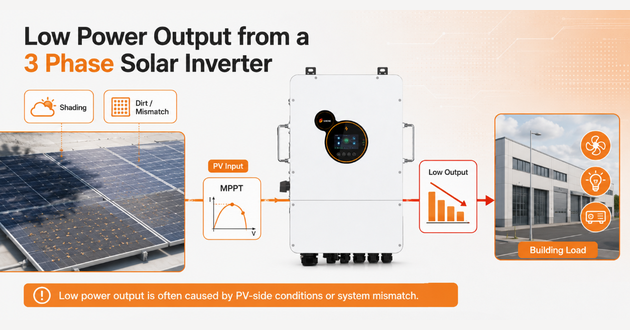
Common factors include insufficient sunlight, shading on PV modules, accumulated dirt on panels, or an inverter capacity that does not match the solar array. In systems using MPPT technology, an unsuitable PV string configuration or input range mismatch may also prevent the inverter from fully utilizing the available solar energy.
To determine the cause, it is important to distinguish between reduced solar input and inverter-related limitations. Monitoring PV input data, comparing generation performance under similar conditions, and reviewing system parameters can help identify where the loss of output occurs.
FAQ About 3 Phase Inverter Problems
1.Why does my 3 phase inverter keep shutting down?
A 3 phase inverter may repeatedly shut down when it detects conditions outside its normal operating range, such as unstable grid voltage, excessive temperature, low DC input, or abnormal system settings. In most cases, the shutdown is a safety response designed to prevent further issues rather than a sign that the inverter has failed completely.
The first thing to check is the inverter error message or monitoring record. For 3 phase hybrid inverter systems, battery voltage, BMS communication, and operating modes should also be reviewed because incorrect battery-related settings can interrupt normal operation.
2.Why is my three phase inverter showing a communication error?
A three phase inverter communication error usually means the inverter cannot exchange data correctly with the monitoring system or connected devices. This can happen because of unstable network connections, incorrect communication parameters, WiFi signal limitations, or RS485 wiring issues.
For 3 phase hybrid inverter applications, communication between the inverter, battery, and BMS is important for monitoring energy flow and battery status. Checking the connection between each device and confirming the communication settings are matched is usually the most effective way to locate the issue.
3.What causes a 3 phase inverter to overheat?
A 3 phase inverter overheats when heat generation exceeds its ability to dissipate heat during operation. This is commonly related to limited installation space, high ambient temperatures, dust buildup, or long periods of operation under heavy loads.
Temperature problems are more likely to appear during peak power periods or in outdoor installations with poor ventilation. Improving airflow around the inverter, keeping cooling areas clean, and avoiding unnecessary overload can help reduce repeated overheating events.
4.How do I fix a 3 phase inverter overvoltage fault?
A 3 phase inverter overvoltage fault usually occurs when the grid voltage rises beyond the inverter’s acceptable range. Common reasons include unstable utility voltage, incorrect grid parameter settings, or problems with the AC connection.
Checking the actual grid voltage at the inverter side is the first step. If the voltage is within the normal range, reviewing inverter settings and inspecting AC wiring can help determine whether the issue comes from configuration or the electrical connection.
5.Why is my 3 phase solar inverter producing low power?
A 3 phase solar inverter may generate less power when the available PV input is lower than expected or when the solar system configuration is not properly matched. Factors such as shading, dirty panels, incorrect PV string design, or unsuitable inverter sizing can all affect energy output.
Comparing inverter generation data with actual solar conditions is often useful for determining whether the limitation comes from the PV system, inverter configuration, or external factors.
6.How long does a three phase inverter usually last?
A three phase inverter generally has a service life of about 10 to 15 years, depending on the installation environment, operating conditions, and component quality. Systems used in high-temperature areas or operated continuously at high loads may experience faster component aging.
Regular monitoring, suitable installation conditions, and selecting an inverter that matches the application requirements can help maintain reliable operation throughout its service life.
